
August 19, 2025
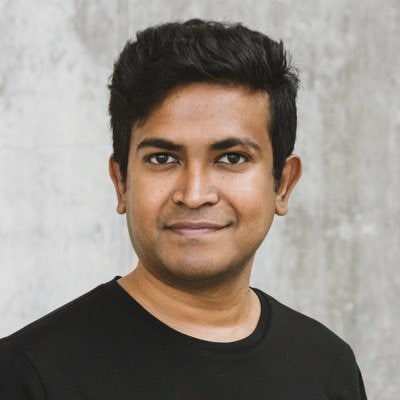
Sangeet Choudary, CEO – Platformation
How To Reshuffle And Reboot Your Organization Like A Pro, Sangeet Choudary – CEO Platformation
Listen on:





When a CEO steps into a company with the mindset of initiating a full-scale reboot, it’s not just a refresh—it’s a renaissance. My best reboots have been built on three foundational pillars: People – Platform – Passion. Platform (my favorite) often becomes the keystone of growth, especially when you reimagine it not just as infrastructure, but as a conduit—an engine of connection. Think of Amazon as the digital bridge between consumers and merchants, or Facebook as the social circuitry linking lives across the globe. Platforms, in their purest form, are the connective tissue of modern enterprise—rebooting how ideas, services, business models, and relationships flow between entities. And when done right, they don’t just support the business—they redefine it.
Bestselling author, Sangeet Choudary – CEO of Platformation Labs, joins us to unpack all of this. A platform guru, he is an advisor to Fortune 50 CEOs, a Scholar at Dartmouth, a Fellow at UC Berkley, and holds key advisory roles in the Indian Government, World Economic Forum, Standard Bank, ING Bank and GPA—the largest food retailer in Latin America.
Listen in as we explore his latest book, Reshuffle: Who Wins When AI Restacks, and explore what I write about in Forbes: how AI is transforming knowledge economies, shifting expertise to AI tools—fundamentally altering our workflows and organization power dynamics.
Platforms Are About Synchronicity, Not Just Transactions
For decades, businesses thought of platforms as digital marketplaces — Amazon for products, Uber for rides, Airbnb for rooms. But Choudhury reframes the discussion: “What’s fundamentally central to the idea of a platform is the idea of coordination.” Unlike a marketplace, where a transaction sits at the center, a true platform coordinates multiple stakeholders to create value together. He used Wikipedia to illustrate the difference, noting that “Wikipedia transforms [publishing] into a persistent coordination machine where creation, editing, reviews and consumption is constantly happening in real time.” Tesla, too, succeeded because it controlled both vehicles and the charging network, aligning incentives that other EV makers could not. As Choudhury put it, “owning an electric vehicle is not just about owning the vehicle, it’s also about having the driving range… and Tesla, by controlling both, solved that coordination problem.”
The Strategy Must Match The Scale
One mistake that platforms make is when they try to start mimicking startups without thinking about the groundwork that needs to be laid. Sangeet recalled when open banks rolled out in the financial industry, even saying “a lot of banks, at least in terms of how they were pursuing innovation, tried to just blindly copy what fintechs and startups were doing.” Startups can operate as they do as they typically get overfunded for focusing on one function, and then “move from that starting point, rebundle and create a larger ecosystem.” This does not work for larger corporations as if they do not have the right structure laid, or one that is malleable enough to be shifted, copying the shiny new innovation only creates frustration as they try to force something that needs more time.
Fighting The Hype Of AI
Sangeet mentioned that his book Reshuffle came from a personal reboot. He notes “ just felt that there was way too much hand waving, too much zombie nodding around how people were thinking about some of these issues.” and through these observations he wanted to re-think his relationship with hype cycles, and popularity. Especially in the context of AI, Sangeet no longer wishes to see those zombies or hand-wavers, but people who find hardy truths about AI through coordinated efforts, and platforms that are making effective and realistic changes.