May, 13, 2026
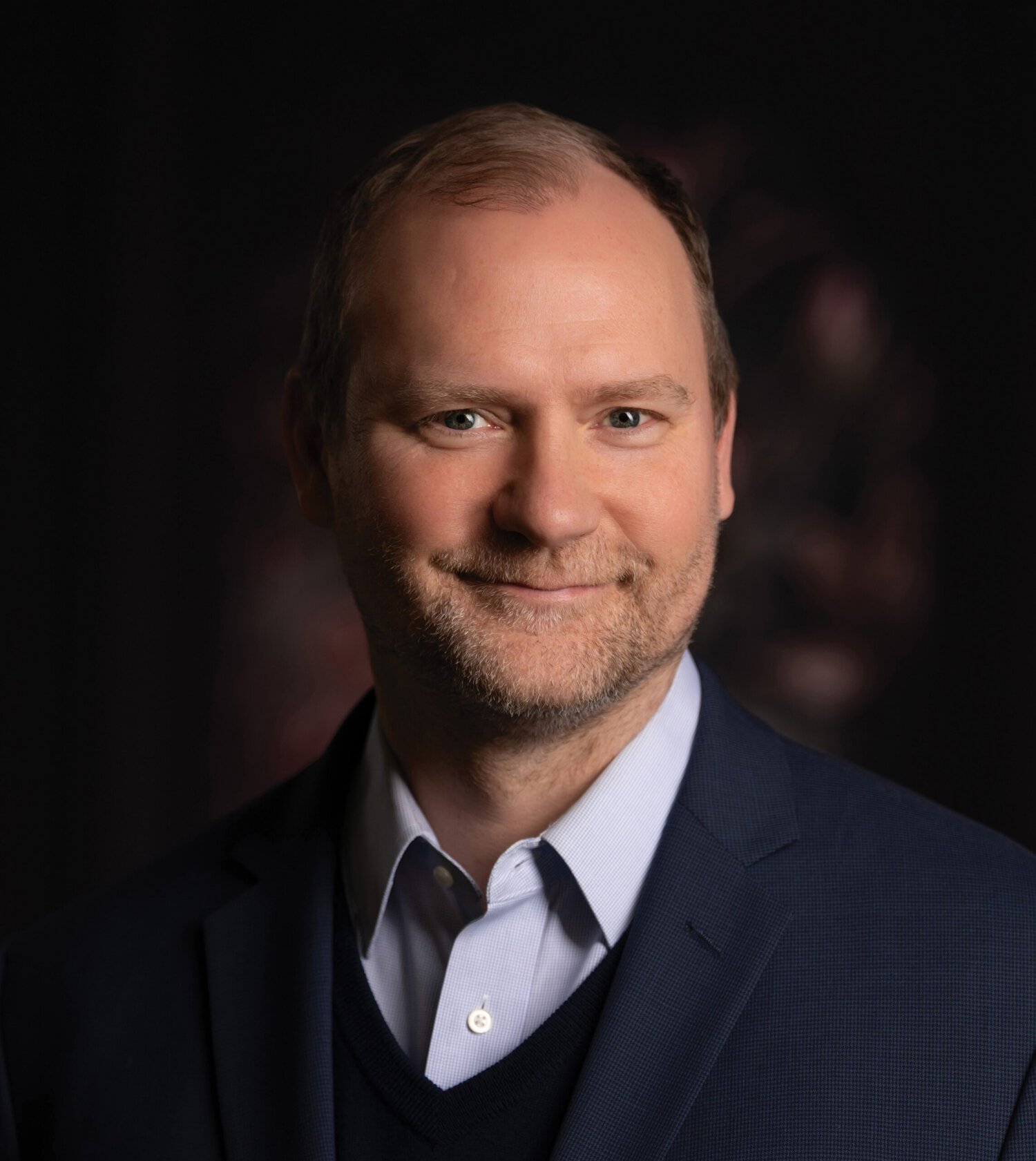
Justin Baer – The Wall Street Journal
Behind The Vault: America’s Most Powerful Financial Dynasty Secrets Revealed, Justin Baer – The WSJ
Listen on:





Few journalists have spent more time inside the power centers of American finance than Justin Baer. As a senior editor at the Wall Street Journal, Baer has covered the biggest banks, brokers, and asset managers in the world, from the post-2008 regulatory battles to the pandemic economic shocks that rewrote the rules of investing almost overnight. His reporting has taken him inside Goldman Sachs, Morgan Stanley, Pimco, and dozens of other institutions that shape how capital moves through the global economy. Now he has turned that same lens onto one of the most influential and least understood firms in American finance, Fidelity Investments, in his new book The House of Fidelity, a rare behind-the-walls look at a company that has managed roughly $18 trillion across 83 million customer accounts while revealing almost nothing about how it actually operates.
On this episode of The Reboot Chronicles Podcast, we sit down with Justin to unpack the hidden history of Fidelity, what the Johnson family dynasty tells us about the future of American investing, and what journalists and investors alike are getting wrong about artificial intelligence. Justin breaks down how Fidelity survived an existential crisis in the 1970s and came out the other side as the dominant force in American retirement savings, why being a private company turned out to be one of the greatest strategic advantages in financial history, how the democratization of investing really began and who deserves the credit, and what the current AI investment boom has in common with the fiber optic bubble of the late 1990s.
From Bloomberg to the Journal to the Book: A Career Following the Money
Justin Baer came to financial journalism the way a lot of New Yorkers come to finance: proximity. Growing up and living in New York, he saw finance not as a distant industry but as the fabric of the city itself, the people on the train, the neighbors, and the friends. When he started his career at Bloomberg News, the first major institution he covered was JPMorgan, and reading Ron Chernow’s House of Morgan gave him a template that stuck with him. Here was a book that treated the people running one of the world’s great banks as historic figures, and Baer was sitting across the table from their modern equivalents, writing about their decisions in real time. The idea that you could do that kind of book; the sweeping institutional history rooted in deep reporting access, stayed with him for years.
The problem was that JPMorgan, Citigroup, and most of the other institutions he covered over the decades at Bloomberg and then the Wall Street Journal already had small libraries written about them. When he began looking seriously for the right subject, he landed on Fidelity almost by accident. He had picked up coverage of the asset management industry and found Fidelity consistently harder to report on than any other major institution, not because it was evasive in an adversarial way, but because it had no natural rhythm of public disclosure. No earnings calls. No quarterly filings. No conferences where executives spoke on the record. Just a massive, privately held company controlled by one family, doing its business largely out of sight. That difficulty, he realized, was the story.
No Buildings, No Politics, No Disclosure
The concept behind the book is straightforward even if the reporting behind it was not. Fidelity is, as Baer describes it, “The ultimate consumer finance company, with a massive marketing organization and products and services that are highly accessible and widely promoted”. What is not part of that marketing campaign is any glimpse into the inner workings of the place. The family that controls it, three generations of Johnsons spanning more than eighty years, does not put its name on buildings in Boston. They also do not engage directly in politics or public policy, as well as a public profile that most families of comparable wealth and influence actively cultivate. That is by design, and it is what made the book both necessary and difficult.
What separates The House of Fidelity from a standard corporate history is the period Baer argues has been most underappreciated: the 1970s, when the industry that Fidelity had been built to serve essentially stopped existing. The go-go years of the 1960s gave way to a brutal bear market, and stock mutual funds, Fidelity’s only product, had almost no buyers. Ned Johnson, who had just taken over the firm from his father amid considerable skepticism about his fitness to lead it, was faced with what amounted to an existential crisis. What he did with that crisis, the experimentation, the pivots, the willingness to try things that looked crazy at the time, set up everything that Fidelity would become in the decades that followed.
The 1970s Reboot: How Fidelity Survived Its Existential Crisis
The list of things Ned Johnson tried during the long bear market of the 1970s reads like a startup pitch deck from fifty years ahead of its time. Selling mutual funds directly to consumers, bypassing the brokers who had always been the distribution channel. Getting into money market funds and bond funds when those barely existed as categories. Launching a brokerage business. Experimenting in venture capital. And eventually building out a series of retirement account products that culminated in the early 1980s with the emergence of the 401k plan as the dominant vehicle for American retirement savings. None of these looked obviously correct at the time. Some of them did not work. But Fidelity had the patience and the financial flexibility that comes from being privately held to keep trying until enough of them did.
Being private, Baer argues, “Was one of Fidelity’s greatest structural advantages throughout its history”. Without public shareholders demanding short-term performance, the company could invest aggressively in multiple directions simultaneously, absorb losses on experiments that did not pan out, and take a genuinely long view on where the industry was heading. Three generations of the same family, each one willing to keep reinventing the place rather than simply protecting what existed, compounded that advantage over decades. In Abby Johnson’s case, who took over in an era when Fidelity’s core active management business was under serious pressure from the rise of index funds and passive investing, the easiest path would have been to manage the decline carefully and avoid being the one who ran the dynasty into the ground. She did not take that path.
The Democratization of Investing and the 401k Machine
The story of how ordinary Americans got access to the stock market runs through Fidelity more than most people realize. The seminal moment, Baer argues, “Was 1975 when the SEC removed the fixed commission structure that had governed stock trading for decades”. That opened the door for Chuck Schwab, whom Baer identifies as the first real pioneer of the discount brokerage model, to dramatically lower the cost of trading and launch what would become an entirely new category of financial services. Fidelity followed and eventually became a dominant player in that space as well.
But the more consequential development was the 401k plan. What began inside Fidelity as simply a new channel for selling mutual funds, giving retirement savers access to Magellan and other Fidelity products through their workplace retirement accounts, turned out to be something far more important. It became the primary way that generation after generation of American workers were introduced to investing at all. When you start your first real job and get enrolled in a 401k, the company administering that plan gets the first crack at a financial relationship that might last a lifetime. Fidelity understood that earlier and more clearly than almost anyone else, and it built an infrastructure around it that became, as Baer describes it, the lifeblood of the organization.
Peter Lynch and the Magellan Fund made Fidelity famous in the 1980s, and the culture of individual portfolio managers running their own funds as though they were artists rather than committee members attracted a generation of brilliant young analysts who saw Fidelity as the place where you could become the next Peter Lynch. That culture drove remarkable performance and remarkable talent density for decades. But when investor tastes shifted toward passive and index funds in the 1990s and beyond, the center of gravity within Fidelity had already moved. The brokerage platform, the 401k record-keeping business, the custodian relationships with thousands of financial advisors around the country, those were what allowed Fidelity to survive and thrive in a world where its original reason for being had been largely disrupted. meant”.
AI, the Fiber Optic Parallel, and the Future of Financial Journalism
Baer is experienced enough to have covered the telecom equipment boom of the late 1990s, and the parallels he draws to the current AI investment cycle are worth taking seriously. Back then, the build-out of fiber optic and wireless networks required enormous capital, and the networks were built well ahead of the content and services that would eventually justify them. The overcapacity that resulted was brutal for the companies leading the charge, even though in a matter of years the infrastructure was indispensable. Netflix and streaming filled the pipes that had looked catastrophically overbuilt. Now, he is watching the current wave of AI infrastructure investment with the same mixture of fascination and caution, noting that the business cases for AI as a genuine revenue generator are still in early days and that the expectations embedded in current valuations may be pricing in a timeline that does not materialize on schedule.
The other difference he flags is subtler but important. The broadband era generated excitement among ordinary people about what might become possible. The AI era has generated something closer to fear, particularly around job loss at the early stages of careers, and that fear is not currently being offset by enough concrete examples of how technology is improving everyday life. In the newsroom, Baer’s own experience with AI has been largely practical: bulleted article summaries for financial platforms that prefer three sentences to three thousand words, and research tools that surface things hiding in dusty corners of the internet that a standard search would miss. Useful, he says. But not yet transformative in the way the boosters promise, and not yet reassuring enough to quiet the concerns of the people most directly in its path.