
November 12, 2025
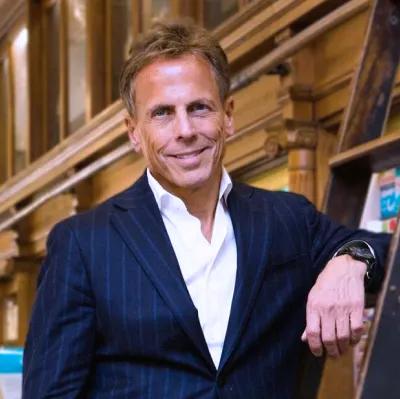
Peter Morici – FMR Chief Economist U.S. Intl. Trade Commission
Adapting A Global Economy To AI, Peter Morici – FMR Chief Economist U.S. Intl. Trade Commission
Listen on:





The global economy is constantly evolving with forces like Automation, Robotics and artificial intelligence redefining the global workforce and how businesses drive growth and innovation at scale. As the Magnificent Seven Tech giants lay off tens of thousands of people leveraging AI to drive out repetitive, mundane tasks, the labor force is challenged to broaden their skillset and redefine their value to stay relevant. Getting an understanding of what is happening in the economy on both a global and a national level has never been more important. In this episode of The Reboot Chronicles Show, we’re joined by economist and commentator Peter Morici to help make sense of the forces driving today’s economic landscape.
Peter is one of America’s most unfiltered and respected economic voices. He has served as Chief Economist at the U.S. International Trade Commission, authored 18 books, and is a familiar guest on CNN, Fox Business, CNBC, and Newsmax. He brings perspective with a historical lens towards economic cycles that infuse logic and experience to help navigate uncertain times. This is precisely why we wanted Peter on the program. To unpack what’s really happening beneath the headlines. To gain insights on how to advance during this consequential AI moment and take advantage of the tremendous opportunity to Reboot to stay relevant.
The Future Of AI And Global Competitiveness
When we asked Peter about the future of AI, he said, “The real money to be made is going to be in the shovels.” A long-time metaphor about who becomes rich during a gold rush, in this instance, there are digital shovel makers like Salesforce and Adobe who are merchants thriving off of the AI rush instead of trying to pursue potentially risky breakthroughs. One of the ways those companies, and frankly, America as a whole, can thrive and grow is to pursue the global market. Peter notes, “If we try to shut ourselves out from the rest of the world, and the Chinese get them, they get the chance to sell to everybody and we don’t”.
The Labor Force And The Future Of AI
AI has been reshaping entire industries; it is something that many of our guests on this show have talked about. Peter’s take on the whole topic is that this is another innovation the world is going through, and wherever there have been innovations in the past, education is the best way to help everyone adjust. “The trick has always been to make people work less with their hands and more with their brains,” is what Peter says, and if that is the way innovation moves, we should have ways to keep up with it. This is why Peter calls out universities, as they are not preparing people well enough for the market; they have become too self-interested. A solution that could help the future workers is for universities to take an equity stake in the loans that go out,” explaining that “when the loans fail, some of it comes out of their hide. All of a sudden, they would get much more serious about what the English department’s doing.”
A Personal Reboot To Potentially Guide Another
When asked about his personal reboot, Peter’s journey mirrors the adaptability he wants America to have. He was someone who was raised in a blue-collar neighborhood and sort of stumbled his way into economics, as sociology was already full. He recalled being a C student who realized, if he didn’t start taking life seriously, he was going to go back to his blue-collar town, something he did not want. Which is why he worked hard to get his PhD in economics, to get out of school in 1974, and was met with a recession. A time when many fresh PhD students were driving taxis just to get by, and a time that taught Peter a very important lesson about reinvention and rebooting oneself. To end on, Peter says, “Technology is going to keep rolling at you every ten years, every seven years, and you are going to have to reinvent yourself.”