
August, 12 2026
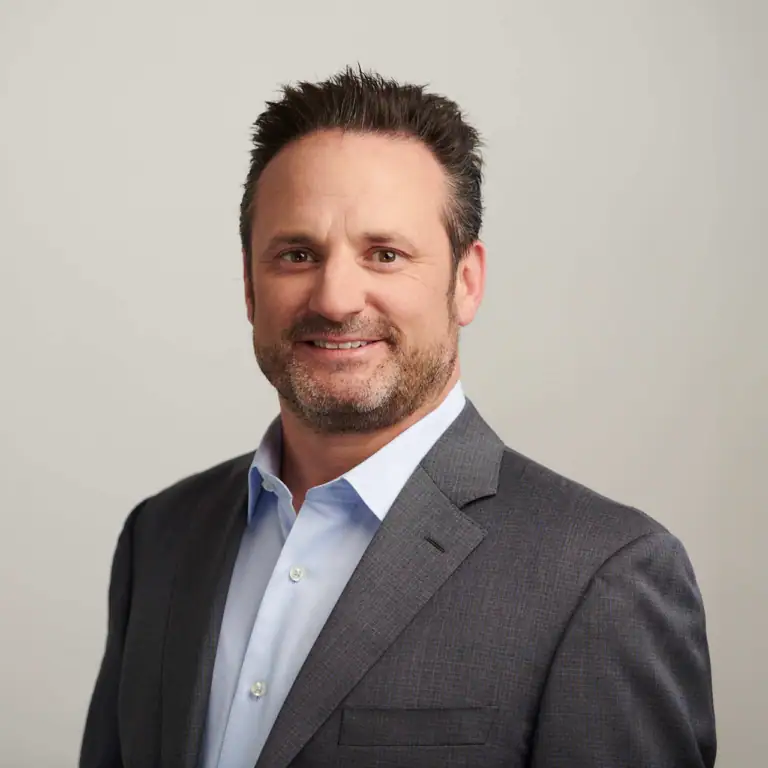
Darragh de Stonndún – CEO, AIR
Automating the Future: Darragh de Stonndún, CEO of AIR
Listen on:





Every medical device implanted in a patient, every cell phone produced at launch scale, every vaccine vial filled at twelve hundred units per minute exists because of industrial automation. It is the invisible infrastructure behind modern manufacturing, and it is one of the fastest growing sectors in the global economy. Darragh de Stonndún has spent his entire career at the center of it. After leaving Ireland in 1998 in pursuit of the automation innovation happening in America, he spent decades building and leading automation businesses across the US, Germany, Ireland, and the UK. In August 2024, he co-founded AIR, an automated industrial robotics platform that has already acquired six best-in-class automation companies across three countries, grown to more than 500 employees, and is producing hundreds of millions in revenue. The timing could not be better. Reshoring, semiconductor expansion, and the race to automate manufacturing across life sciences, logistics, and consumer electronics are pushing the sector toward a hundred billion dollar market. AIR is building the platform designed to serve that market, and de Stondún is building it the same way he has always built machines: with precision, discipline, and an obsessive focus on getting every part of the system right.
On this episode of The Reboot Chronicles Podcast, we sit down with Darragh de Stonndún, CEO of AIR, to unpack how he is building a unified automation powerhouse rather than a collection of acquired companies, why automation is no longer optional for manufacturers competing in a reshored America, how AI is reshaping what is possible in industrial robotics, what humans in the loop actually means on a factory floor, and why the biggest challenge in building AIR is not technology but separating signal from noise in a market moving faster than ever.
Building a Company, Not a Collection: The AIR Acquisition Philosophy
When de Stondún and co-founder Brian launched AIR in August 2024, they were deliberate about one thing from the start: they were building a company, not assembling a federation of independently operating businesses. That distinction matters enormously in how they approach every acquisition decision and every integration that follows. The goal is a unified culture, a unified value proposition, and a unified capability platform that customers experience as a single company regardless of which team they are working with.
Culture is the first filter for every potential acquisition. Before technology fit, before revenue profile, before geographic coverage, de Stondún asks whether the people and the values of the target company are aligned with what AIR is building. That discipline has kept the acquisition pace measured even when the opportunity pipeline is large. He describes the current state of the company as being on the sixth floor of a sixteen-story building. Each new acquisition needs to add enabling technology that the existing platform does not yet have, expand the skill sets available to the organization, and create new opportunities for the people already inside AIR to grow. Acquiring more of what already exists inside the platform is not the goal. Acquiring capabilities that make the whole system stronger is. “The funnel starts to get really, really small, really, really narrow,” de Stondún said. “Finding the right ones is hard. And holding ourselves to the standard we set in culture and technology is what stops us from acquiring at a faster pace.”
Why Automation Is No Longer Optional
The tolerances required to manufacture a modern orthopedic knee joint cannot be achieved by human hands. The cleanliness standards required for pharmaceutical production in aseptic environments cannot be consistently met by human workers. The micron-level precision required to assemble a modern cell phone cannot be replicated manually at scale. And producing vaccines at twelve hundred vials per minute is simply not possible without automation. These are not edge cases. They are the standard operating reality for the manufacturing sectors AIR serves.
Consumer expectations have made the situation more acute. When the iPhone launched in 2007, customers waited months to get one. Today, a product that cannot be delivered at scale on launch day is a failed product launch. The volume requirements that consumer demand now places on manufacturers, combined with the precision requirements that product complexity demands, have made automation a foundational requirement rather than an optional efficiency play. De Stonndún is equally clear that this does not mean automation replaces people. Repetitive manual tasks that humans find unrewarding can be handled by machines. The oversight, judgment, intervention, and continuous improvement work that makes a manufacturing operation run well still requires people, and AIR designs its systems with that human role built in from the start. “Automation makes humans better,” he said. “The bicycle makes the human go faster. That is what we focus on.”
Reshoring America’s Manufacturing Base
The reshoring of manufacturing to the United States is one of the defining industrial trends of this decade, and de Stondún and his team are living it every day. AIR is actively involved in projects that are bringing manufacturing operations back to American soil, and the work happening now will not be visible to consumers for another twelve to eighteen months as systems are built, commissioned, and production begins. The excitement he has about what that pipeline will produce is grounded in a clear-eyed understanding of what makes reshoring economically viable.
American labor costs are significantly higher than those in the countries that absorbed manufacturing over the past several decades. The only way to compete at those cost levels is through automation that multiplies the output and precision of every worker on the floor. That is not a generic pitch for automation. It is a specific engagement model in which AIR partners deeply with each customer to understand their product, their business model, their workforce, and their cost structure, and designs a solution that makes their manufacturing competitive rather than just selling them a system that checks a specification. “It is about partnering together to really understand how we can get that holistic solution,” de Stonndún said. “Not just delivering something that does X, Y, and Z.”
AI as a Tool, Not a Shortcut
De Stonndún’s view on AI in industrial automation is practical and grounded in the same engineering discipline that defines everything else about how he builds. AI is not a shortcut. It is not about automating emails or generating reports. It is a tool that, when applied correctly, allows AIR to push boundaries that were previously unreachable in system design and simulation. The ability to simulate a manufacturing system in software before a single physical component is built, drawing on the accumulated data from decades of similar systems, allows AIR to design with a confidence and precision that iterative physical prototyping alone could never achieve.
Internally, AIR encourages its engineering teams to embrace AI as a capability multiplier rather than a threat to their roles. The engineers who will flourish in this environment are the ones who remain genuinely curious about how systems work, who are willing to learn new tools without treating them as shortcuts, and who bring the judgment and problem-solving orientation that no AI system can replicate. The advice de Stonndún gives to people who want to work in industrial automation is direct: embrace the technology, understand it deeply, and use it to become better at the work rather than to replace the thinking behind it.
The hardest part of operating in the current environment, he acknowledges, is not the technology itself but the volume of it. New capabilities are emerging faster than any organization can evaluate and integrate them, and the pressure to stay current is constant. AIR’s response is to be selective, partnering deeply with a small number of technology partners rather than spreading attention across a large portfolio of shallow relationships, and to maintain the engineering discipline to say that a promising technology is not yet ready for production deployment when that is the honest assessment.
The Personal Reboot: Business First, Balance Second
De Stonndún’s most candid admission from the conversation is also his most consistent personal challenge. Since the early days of building his first automation business, he has put the commitments he makes to customers, employees, and partners ahead of everything else in his life, including his personal relationships. Moving from Ireland to the US, from the US to Germany, and back again in pursuit of the right opportunity to build the right business were decisions made on the basis of what the work required, not what personal circumstances called for.
He does not frame this as a regret. He frames it as a tension he still lives with every day and has not fully resolved. The commitments he makes to the people who trust him carry a weight that consistently takes priority, and he is honest that finding the balance between that commitment and everything outside of work is something he continues to struggle with. What softens that tension is genuine love for the work. Building a team that spans three countries and three cultures, watching people grow alongside the systems they build, being trusted with the manufacturing of products that matter in people’s lives, including the medical devices that patients depend on and the consumer products that define daily life, is a privilege he does not take for granted. “It becomes your life,” he said. “Twenty-four seven. And I love every bit of it.”