
October, 28 2026
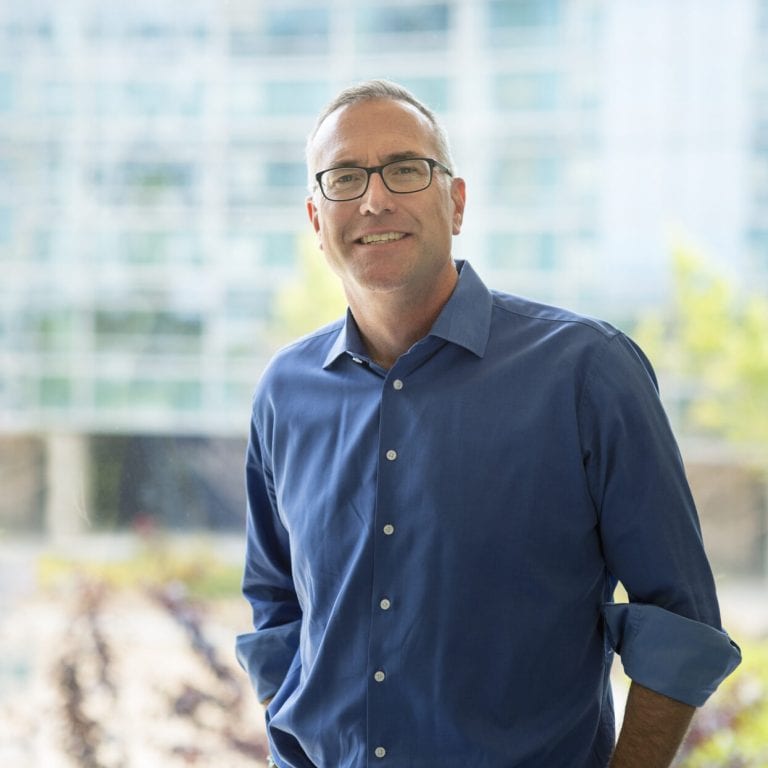
Daniel Yanisse – CEO, Checkr
Is This Person Who They Say They Are? Daniel Yanisse, CEO of Checkr
Listen on:





Every major transaction now depends on a single question: is this person who they say they are? Hiring, mortgages, apartment rentals, insurance claims, and government benefits all rely on accurate identity, background, income, and employment information. AI has made that question far harder to answer. Synthetic personas, forged documents, and deepfake interviews can now be produced with free tools, and fraud has never been cheaper to commit at scale. In a roughly 45 billion dollar verification market, trust has become a real time requirement. Checkr, founded more than a decade ago to modernize an old school background check industry, has built an AI-powered verification platform that processes more than 50 million checks a year for roughly 150,000 customers, drawing on thousands of data sources to deliver results in minutes rather than weeks.
On this episode of The Reboot Chronicles Podcast, we sit down with Daniel Yanisse, co-founder and CEO of Checkr, to unpack the rise of AI-driven fraud and what it means for every business that needs to verify a person. Daniel shares the story of the fraudulent candidate Checkr caught and then deliberately hired, why remote hiring scams have become a growing security threat for US companies, and how Checkr expanded from background checks for gig platforms into lending, mortgage, rentals, insurance, and government verification. He also opens up about the two major reboots that reshaped the company, from a 30 percent monthly revenue drop during COVID to the overconfidence that taught him to listen more closely to customers.
The Candidate Checkr Hired on Purpose
Yanisse first read about hiring fraud in media reports describing North Korean operatives attempting to get jobs at Fortune 500 companies. He assumed it was a niche problem. That changed at the beginning of 2026, when one of Checkr’s own engineering managers flagged an interview that felt off. The candidate’s LinkedIn profile showed one person, while the individual on the Zoom interview was clearly someone else. Rather than rejecting the applicant, Yanisse and Checkr’s CTO decided to see how far the scheme would go. “Everyone would be spooked,” he said. “I got excited. Let’s honeypot it.”
The candidate moved through every interview round and received a formal offer, with a start date in Checkr’s San Francisco office. Checkr hires only in office, so the company arranged for security to be on site on day one and stayed in contact with the local FBI. The day before his start date, the candidate emailed to say he was still in New York and asked whether he could start remotely and have a laptop shipped to him. That request revealed the purpose of the scheme. According to Yanisse, remote hiring scams have become one of the most common fraud patterns used by North Korean operatives, who seek remote engineering roles at US companies to collect salaries and, in some cases, gain access to company systems. Some do the work well. The risk is what else they do once they are inside.
Why Hiring Fraud Is a Security Problem
Most executives are now seeing the effects of AI in their hiring funnels. Candidates use AI to write or embellish resumes and apply to hundreds or thousands of roles at once, leaving recruiters overwhelmed with applications, many of them inaccurate or entirely fabricated. Checkr has built tools to help companies filter that noise at the top of the funnel. But Yanisse believes leaders are missing the larger risk. “They don’t really connect the dots that this could be the next cyber attack and hack on their company,” he said.
He notes that the vast majority of cyberattacks begin with a human failure rather than a sophisticated technical exploit. A fraudulent hire, or a bad actor who gains influence over a contractor with system access, can become the entry point for a breach. The same AI tools that make resumes easier to fake also make documents easier to forge. “Falsifying documents was pretty hard before,” Yanisse explained. “You needed to be pretty good at Photoshop. Now with Gemini or OpenAI you can falsify a document and it’s basically undetectable.” That shift is why Checkr increasingly verifies information directly at the source, connecting to systems such as the DMV and Social Security records rather than relying on documents submitted by applicants.
From Paper and Fax to a Verification Platform
Yanisse started Checkr at 25, after working as a software engineer at an on-demand delivery startup that needed to hire thousands of drivers quickly. Gig hiring does not involve traditional interviews or resume reviews. The core question is whether a worker is safe. Background checks were essential to that process, but the industry was still largely manual, dependent on paper and fax machines. It was a multibillion dollar market ready for automation. Checkr grew quickly by serving the major gig platforms and marketplaces, including companies such as Lyft, Uber, and DoorDash, and went from zero to 200 million dollars in revenue in about three years.
Today, Checkr has expanded well beyond hiring. Companies in lending, mortgage, rentals, insurance, and government all face the same need to verify an applicant’s identity, income, and employment. Last year Checkr acquired Truework, which accelerated its entry into lending and mortgage, an industry with distinct buyers, needs, and regulations. This year it acquired a startup focused on government verification, helping states confirm that benefits payments reach eligible recipients and reduce improper payments. “We can save money to taxpayers,” Yanisse said, “while ensuring that people who genuinely need assistance receive it.” According to Forrester, Checkr customers see roughly 160 to 170 percent ROI, driven by faster hiring and approvals and by reduced fraud risk.
Checkr is also building toward a longer term vision with Checkr Personal, a free consumer product that lets individuals own their verified identity and credential data and share it with employers, lenders, or others. The product is built on consent. If a family wants to verify a nanny or contractor, both parties opt in, and the information is verified at the source to protect against fakes and AI generated documents.
Two Reboots That Reshaped the Company
Checkr’s growth was not a straight line. After hypergrowth from 2014 through 2019, the company had saturated its initial gig platform market and growth was already slowing when COVID hit in 2020. Ridesharing and many of Checkr’s largest customers saw demand collapse almost overnight. “Our revenue dropped 30 percent month over month,” Yanisse said. The company had to make layoffs during a period of extraordinary uncertainty. He credits persistence for getting through it. “When times are hard, I can’t quit because I’m not a quitter,” he said. “With smart people, you always eventually find a way if you keep being persistent.”
The second reboot came in 2023 and 2024, when hiring slowed significantly after the post-COVID surge. It exposed a strategic weakness: Checkr was too dependent on the hiring market and broader macroeconomic conditions. The response was diversification, transforming Checkr from a single background check product into a multi-product verification platform that applies the same identity and credential data across industries. That expansion now positions Checkr to compete with large, established data companies and credit bureaus. Yanisse is candid that overconfidence contributed to the challenges. After winning the gig economy, he assumed Fortune 500 employers would be an easy next step. “We failed because we were overly confident, we didn’t listen to customers, we thought we knew what they wanted, and we were not humble enough,” he said.
Leadership Lessons for the AI Era
Yanisse describes the CEO role as lonely, especially when team members, investors, or board members add pressure during difficult periods. The hardest moments for him were when people he had worked closely with began to leave. He relied on a small support system outside the company, including his wife and his co-founder and best friend, and encourages other leaders to build the same kind of network.
His advice for AI companies experiencing rapid growth is direct: stay humble. “If you think things are growing vertically, maybe take a cold shower, because things are going to slow down at some point.” He also cautions executives against thinking about AI in extremes, whether that means predicting companies with no employees or no need for junior talent. “The reality of business is it’s never black or white,” he said. “And the change is always slower than everyone expects.” Checkr is seeing real gains from AI in engineering, but Yanisse expects broader automation across functions such as marketing and design to take time. Culturally, he believes durable companies are built on high standards balanced with human connection, not burnout. “Right now it’s a grind culture, people have no life,” he said. “That’s not how you build a durable culture and company.”