
August, 26 2026
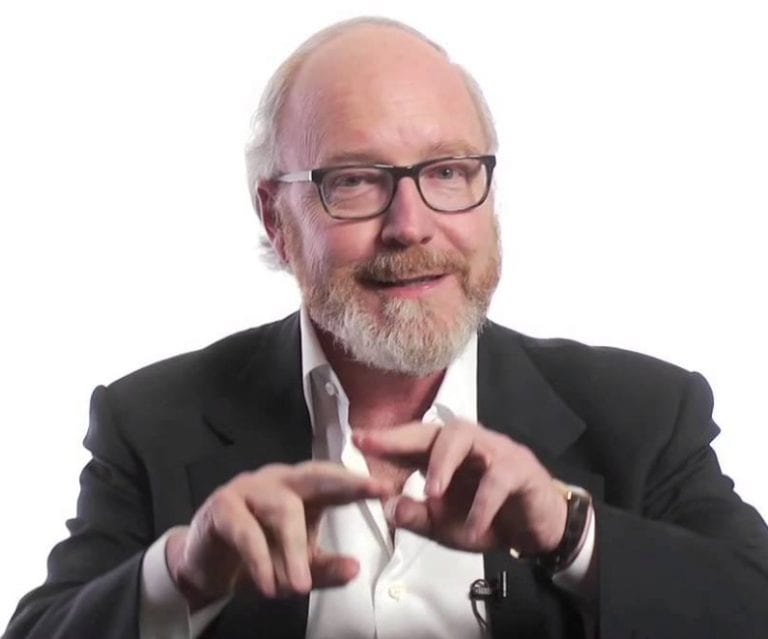
Dave Wright – CIO, ServiceNow
Breaking the Iteration Trap: Dave Wright, Chief Innovation Officer at ServiceNow
Listen on:





Most companies deploying AI are making the same mistake. They are using it to do what they already do, faster and cheaper, and then wondering why the return on investment does not materialize. Dave Wright calls this the iteration trap, and breaking out of it is the central argument of his new book, Infinite, co-written with ServiceNow futurist Brian Solas. As chief innovation officer at ServiceNow, Wright has watched the company grow from 300 employees to 30,000, worked alongside every CEO the company has ever had, and spent decades building the actual systems that run inside thousands of the world’s largest corporations. His perspective on AI is not theoretical. It is grounded in what happens when organizations stop asking how to automate what they already do and start asking what they want to become. The difference between those two questions, Wright argues, is the difference between AI as an incremental efficiency tool and AI as a genuine operating model for business reinvention.
On this episode of The Reboot Chronicles Podcast, we sit down with Dave Wright, chief innovation officer at ServiceNow, to unpack why most AI strategies are failing before they start, how IKEA turned a customer service automation project into a billion euro revenue stream, what a hybrid workforce of humans and agents actually looks like in practice, why every company needs a chief workflow officer, and what it means to lead innovation inside one of the fastest growing enterprise software companies in the world. Wright also shares what he has learned from working under four very different CEOs and why the chief innovation officer might be both the best and worst job in any company.
The Iteration Trap: Why Most AI Strategies Are Broken Before They Start
The pattern Wright sees most consistently across the enterprises he works with is organizations deploying AI without first asking what they want to achieve from a business perspective. A government delegation arrives in Washington to discuss AI strategy and announces a plan to deflect 85 percent of citizen inquiries. When Wright asks whether they plan to reduce headcount as a result, they say no. When he asks whether they are currently overwhelmed with calls they cannot handle, they say no. The room of 40 people looks at each other and realizes no one has asked the most basic question: why are we deploying AI at all?
This is the iteration trap in its purest form. Companies and institutions reach for AI as a technology deployment rather than a business strategy. They ask how to automate what already exists rather than what they want to create that does not yet exist. The result is AI projects that deliver modest efficiency gains, generate underwhelming returns, and leave leadership teams frustrated and skeptical. Wright’s argument in Infinite is that AI should be treated as an operating model, a fundamental rethinking of how the organization creates value, not a tool layered on top of existing workflows designed for a world where human resource was scarce. “The chances that everything you defined in the past is correct for how you want to operate in the future,” he said, “is pretty slim.”
Mode One and Mode Two: The Two Ways to Deploy AI
Wright organizes AI deployment into two modes, and argues that most companies are stuck in one when they need to be running both simultaneously. Mode one is cost reduction: using AI to eliminate inefficiency, automate repetitive tasks, and reduce the resources required to do what the organization already does. Mode two is top line growth: using AI to create new products, enter new markets, serve customers in new ways, and generate revenue that did not previously exist. Mode one, he argues, is what funds mode two. The efficiency gains from automating existing operations are the fuel that makes business reinvention possible.
The IKEA example illustrates the distinction better than almost any other case Wright cites. IKEA deployed AI to automate customer service, a classic mode one project. The automation freed up 8,200 people. Rather than simply reducing headcount, IKEA looked at what those customer service conversations were actually about and identified that a significant portion involved design questions: will this fit my room, what would look good with it, what else should I consider? They could not automate those conversations, but they could build an interior design consultancy staffed by the people freed up from automated customer service. The initial automation project saved approximately 13.4 million euros per year. The design consultancy generated over a billion euros per year and increased IKEA’s top line revenue by four percent. That is the difference between asking how to automate and asking what to become.
The Dogs Are Winning: The Hidden Cost of Misallocated Efficiency
Tim Hogarth, chief commercial officer of ANZ Bank, put the problem in terms that have stayed with Wright since he heard them on stage in front of 3,000 people in Australia. ANZ was spending significant money on AI tools that were saving employees 20 to 30 minutes per day. The problem was that those minutes were not being redirected toward anything strategically valuable. They were simply going home with the employees, who were walking their dogs for longer. “I’m spending millions of dollars,” Hogarth said, “and the only people winning are the dogs.”
The observation points to a gap that most AI strategies fail to close: the difference between creating efficiency and capturing it. In a 10,000-person company, half an hour per day per employee translates to the equivalent of approximately 600 full-time heads. If that time is simply absorbed into slightly longer lunches and earlier departures, the investment delivers no business return. If it is deliberately redirected toward the strategic priorities the organization has identified, it represents a meaningful expansion of capacity without a corresponding expansion of cost. The difference between those two outcomes is not the AI. It is whether leadership has been specific about what the freed-up capacity is supposed to accomplish.
Transparency, Trust, and the Emperor’s New Clothes Problem
Wright identifies two ingredients that most AI strategies are missing: transparency from leadership about what the organization is actually trying to achieve with AI, and a culture of trust in which employees feel safe saying that a particular AI deployment is not working. The absence of transparency leaves employees guessing whether AI is being deployed to reduce their headcount, to manage growth without adding people, or to create genuinely new capabilities. All three are valid strategies, he argues, but they require very different responses from the workforce and should be communicated clearly rather than left to rumor.
The trust problem is subtler but equally damaging. AI creates what Wright calls an Emperor’s New Clothes dynamic inside organizations. People can see that the AI output is not good, that the experience is worse than before, that the tool is creating friction rather than removing it, but nobody wants to say so because they do not want to appear resistant to change or negative about technology. The result is bad AI deployments that persist and compound rather than being corrected. Building an environment where employees can give honest feedback on AI performance, Wright argues, is not a soft cultural priority. It is a hard operational requirement for getting AI to actually deliver value.
The Hybrid Workforce and the Chief Workflow Officer
The organizational question that Wright believes most companies are not yet asking seriously enough is what it means to manage a workforce that is partly human and partly agentic. The middle management layer in most large organizations exists primarily to coordinate and hand off work between people and teams. As AI agents take over more of that coordination, the role of a manager shifts from overseeing eight people to overseeing a team that might include eight physical employees and forty AI agents. The skills required for that are different, and the organizational structures built around the old model are not designed to support it.
The deeper structural gap Wright identifies is the absence of anyone responsible for workflows as a discipline. Companies have chief data officers, chief AI officers, and chief digital transformation officers. What they typically do not have is anyone specifically accountable for how value flows across the organization through its processes and handoffs. The org chart shows reporting lines. It does not show how work actually moves. When organizations start deploying AI at the workflow level, they discover all the informal workarounds, undocumented exceptions, and institutional knowledge that the org chart never captured. Wright argues this is actually one of the most valuable side effects of AI deployment: it functions as a free audit of how the company really operates. And managing what that audit reveals requires someone whose job is specifically the workflow, not the technology, not the data, and not the people in isolation.
Working Under Four CEOs and the Art of the Influence Job
Wright has been at ServiceNow long enough to work under every CEO the company has ever had, and each one has required a fundamentally different approach. Fred Luddy, the founder and an engineer, was focused on platform purity. Frank Slootman was a product manager who drove multiple product streams. John Donahoe brought a brand and people orientation. Bill McDermott is focused on execution. Each was the right leader for where the company was at that moment, and each required Wright to recalibrate how he communicated, what he emphasized, and what kind of case he needed to make to get the organization to move in the direction he believed it needed to go.
That recalibration is, in his view, the defining challenge of an innovation role. It is an influential job, not a command-and-control job. Being right about something means very little if you cannot persuade the organization to act on it, and the timeline between being right and seeing results is often five or six years. The patience required for that is not natural for people who have spent their careers in roles where results are measured quarterly. Wright describes it as the best job in the world from the outside, spending time on research, engaging with emerging technologies including quantum computing, and having conversations that shape the direction of a major enterprise, and the worst job in the company from the inside, because the only tool available is persuasion.