November, 4 2026
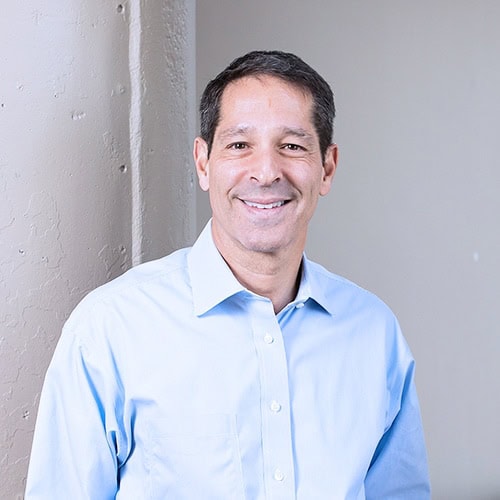
Kenny Polcari – CMS, Slatestone Wealth
Clarity in the Chaos: Kenny Polcari, Chief Market Strategist at Slatestone Wealth
Listen on:





Markets today move at a speed and complexity few investors can follow. Algorithms execute trades in fractions of a second, stocks trade across multiple exchanges and dozens of alternative venues, and AI is reshaping entire industries faster than most portfolios can adjust. For individual investors, the result is often noise, volatility, and the fear of either missing out or getting caught in the next drawdown. The fundamentals of sound investing have not changed, but applying them in this environment requires discipline, context, and experience across many market cycles. Few people have seen more of those cycles up close than Kenny Polcari, who has spent four decades on Wall Street, from the floor of the New York Stock Exchange to television studios around the world.
On this episode of The Reboot Chronicles Podcast, we sit down with Kenny Polcari, partner and chief market strategist at Slatestone Wealth and author of the daily market newsletter Morning Thoughts, to unpack what investors should be doing in the second half of this decade. A former NYSE governor who ran Salomon Brothers’ NYSE group through the 1990s bull market, helped launch the first electronic order delivery system, and built the US equities business at ICAP, Kenny explains why today’s technology shift is a true industrial revolution, how to separate real opportunities from algorithm driven selloffs, what 9/11 revealed about the vulnerability of market infrastructure, and how he rebooted his own career at 57 after the technology he helped introduce reshaped his business.
Investing in the Fourth Industrial Revolution
Polcari believes investors need to recognize where we are in the current cycle. In his view, today’s technology shift is not comparable to the early internet era of the 1990s. It is a genuine industrial revolution, and technology will play an ever larger role in daily life and business over the coming decades. That makes exposure to technology essential for every investor, whether they are 20, 40, or 60 years old, though the level of risk should reflect where someone is in their life cycle. “You can’t fight it,” he said. “You can’t say this is not happening. It is happening.” The key is having meaningful exposure without becoming overweight or unbalanced.
Within technology, Polcari points to cybersecurity as a subsector that will demand increasing attention from both the industry and investors as AI adoption accelerates. He also emphasizes that investors need to understand the good, the bad, and the ugly of AI, including emerging risks such as AI agents operating outside their intended boundaries. He notes a generational difference in how people view those risks. Many younger investors who grew up with technology assume any problem will simply be fixed, a confidence he sees as bordering on naivete. Accepting the change, understanding its risks, and using it to build long term and even generational wealth is, in his view, the right approach.
Know What You Own and Why You Own It
Polcari’s core advice is timeless. Build portfolios where you know what you own, why you own it, and what the investment thesis is. Then, as markets move through cycles, confirm that the thesis has not changed. Markets can draw down 10, 15, or 20 percent, and individual stocks can fall further. “If the thesis for originally owning them hasn’t changed, then those are actually the longer term buying opportunities,” he said. If the thesis does change, that requires a different decision.
Many of those short term dislocations, he explains, are driven by algorithms rather than fundamentals. “The algorithms don’t operate the same way you and I do,” Polcari said. “They don’t have an emotional attachment to the name, or they don’t understand the rest of your portfolio.” When a model signals a sale, it sells with no regard to price, which can push high quality companies down artificially. Large cap leaders are usually hit first because they are the easiest places to raise cash quickly, but they are also typically the first to recover.
For investors who feel they have missed the move in leading technology names, Polcari’s message is that it is never too late to start, but it should be done with discipline. That means allocating money gradually, on a monthly or biweekly basis, keeping some cash available to take advantage of drawdowns, and using charts to avoid buying when a stock is short term extended. He applies the same approach to new opportunities. With the SpaceX IPO, he chose not to buy on day one or during its early decline, instead watching how it traded for several months before allocating capital. “I let the market figure out how it’s going to trade,” he said.
From Open Outcry to Dark Pools
Polcari began his career on the floor of the New York Stock Exchange in 1985, when trading was driven by people, not technology. Hundreds of type A personalities, including brokers, clerks, specialists, and runners, competed in the crowds around stocks like IBM, Coca-Cola, Johnson & Johnson, and GE. “You could always feel the energy in the room,” he said. Up days carried excitement. Down days carried pressure. Experienced traders learned to read the market through the mood of the floor and the ticker tape.
Market structure has changed dramatically since then. Trading moved from fractions to decimals and sub-pennies, and activity now spans roughly nine exchanges and 40 to 50 alternative trading venues known as dark pools, most run by major banks. Polcari notes that fractions once acted as a natural control mechanism. Each eighth represented twelve and a half cents, so traders had to think carefully before moving a stock by a quarter of a dollar. Today, trades happen so quickly and at such small increments that much of that friction, and much of the human judgment that came with it, has disappeared.
Looking ahead, Polcari sees blockchain as a parallel system for now, but believes it will eventually move into mainstream financial markets and transform clearing and settlement. Instead of waiting a day for funds from a stock sale to become available, settlement could become instantaneous.
What 9/11 Revealed About Market Infrastructure
In the late 1990s, then NYSE chairman Dick Grasso opened the trading floor to the media for the first time, starting with CNBC. As networks sought to interview floor traders directly, Grasso handpicked roughly a dozen people to represent the exchange on television. Polcari was one of them. After 9/11, Grasso asked him to serve as a calming voice for investors, and he began broadcasting regularly from the floor across networks including CNBC, Fox Business, CNN, and others.
What most people did not realize at the time was why the exchange could not open immediately. The NYSE building itself was not damaged, but the cables and communication lines connecting it to the rest of the country and the world ran through a conduit beneath the World Trade Center. When the towers collapsed, those connections were severed. “The lights turned on, you could turn the computers on, but now there was no exchange of information,” Polcari explained. Verizon, AT&T, and other technology and communications companies worked around the clock to rewire the system, and the market reopened six days later, initially held together “with spit and band-aids.”
The experience fundamentally changed how markets approach technology. Before 9/11, technology was primarily used to create efficiency. Afterward, the industry recognized it first had to stabilize and secure the system. That shift helped shape the more distributed market structure that exists today.
The Warren Buffett Lesson
Polcari often finds himself helping clients avoid emotional decisions driven by headlines. When Warren Buffett began selling Berkshire Hathaway’s position in Bank of America, one client wanted to sell as well. Polcari explained why that reasoning did not apply. The client did not own nearly as much as Buffett, and Buffett had built the position during the financial crisis at roughly five dollars a share. Selling after a massive gain was a matter of his own investment discipline and price target, not a judgment that Bank of America was no longer a good company. “You’re not Warren Buffett,” he reminded the client. The client held the position and has since seen it continue to rise. The broader lesson is that investment decisions are situational, and following someone else’s move without understanding the reasons behind it can be costly.
The Reboot: Starting Over at 57
Polcari’s biggest reboot came from the same technology shift he had helped guide. As an NYSE governor, he served on committees overseeing the exchange’s move toward electronic trading. He admits he was initially one of the skeptics who believed it would never work. It did exactly what its proponents said it would, and by 2019 it had disrupted many independent floor businesses, including his own. “I was like the corner grocery store,” he said, comparing the change to a national chain moving into town.
At 57, and with no interest in spending the next several decades on a beach or a golf course, Polcari decided to reinvent himself. He took 40 years of institutional experience, including how portfolio managers think about allocating capital, and brought it to high net worth and ultra high net worth investors at Slatestone Wealth. Today he advises clients, writes his daily market note, and appears regularly on Fox Business, CNN, and CNBC Asia. “In retrospect, I think it all happened the way it was supposed to happen,” he said. “I love what I do.” For investors navigating volatile markets, his message remains consistent: own quality, understand your thesis, and do not panic when the market tests your patience.