
October, 21 2026
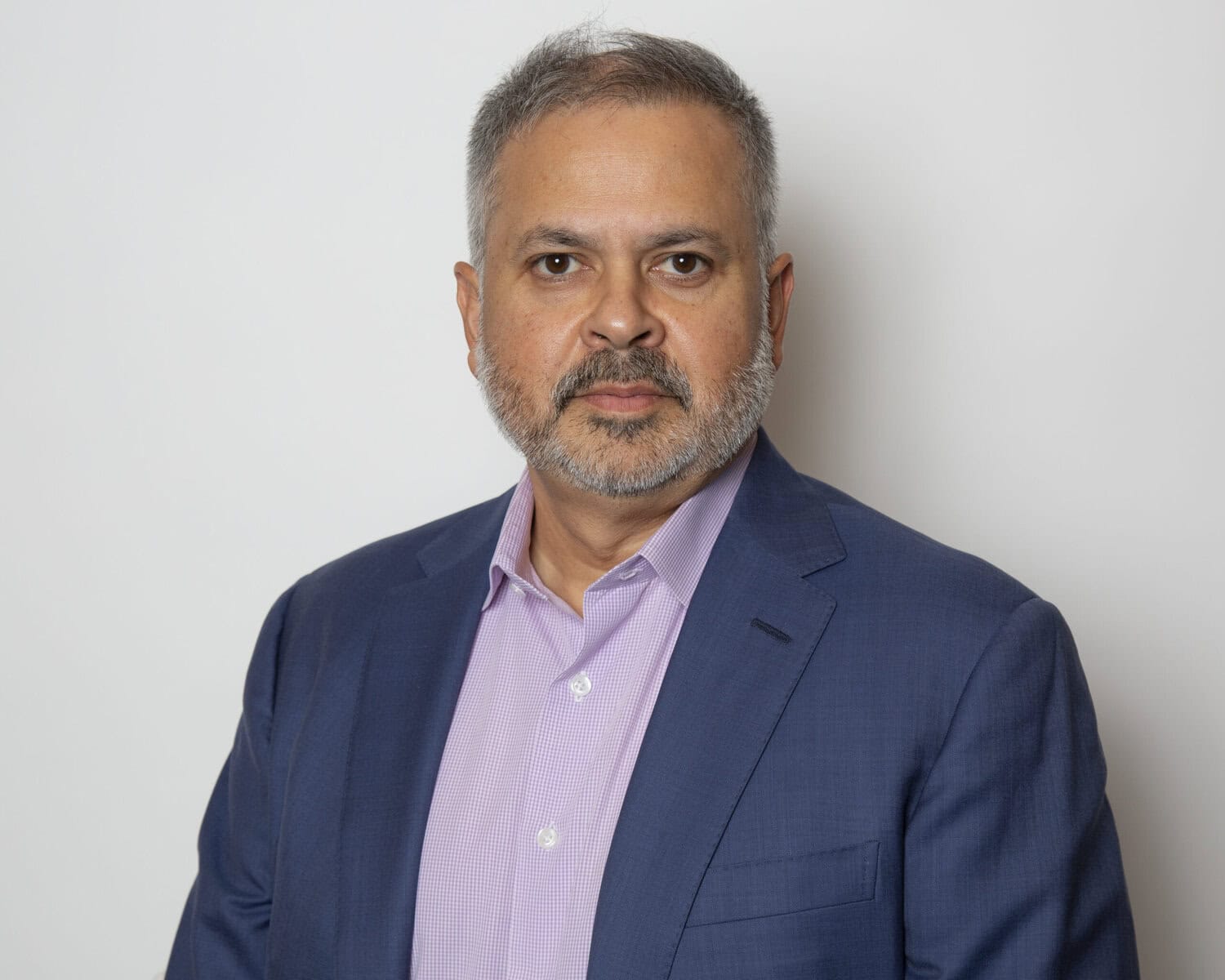
Girish Rishi – CEO, Cognite
From Data Chaos to Industrial Intelligence: Girish Rishi, CEO of Cognite
Listen on:





Industrial companies are sitting on decades of data they cannot use. Since the postwar industrial boom, refineries, plants, and factory floors around the world have been built up with layer after layer of electromechanical, digital, and IT systems, each generating information in its own format and its own silo. For the people running those operations, getting timely, contextualized data and a single version of the truth remains one of the hardest problems in business. As AI moves from experimentation to execution, that gap has become a boardroom issue. Cognite is one of the companies closing it, and the market has taken notice. Schneider Electric has announced its intent to acquire Cognite for three billion dollars, Forrester has quantified a 465 percent ROI for Cognite customers with a six month payback, and the company ranks number 15 on CNBC’s 2026 Disruptor 50 list. CEO Girish Rishi has set an ambitious target to match: delivering 100 billion dollars in value to customers by 2035.
On this episode of The Reboot Chronicles Podcast, we sit down with Girish Rishi, CEO of Cognite, to unpack why the factory floor is the last great frontier for digital transformation, how Cognite turned industrial data integration from a services problem into a software platform, and why industrial AI is becoming the backbone of global energy, manufacturing, and asset intensive operations. Girish shares how the Schneider Electric deal came together while Cognite was raising its Series C with an eye toward going public, how the company’s consumption based model ties AI spending directly to customer value, and the career defining moment when he was handed responsibility for an 850 person business across Europe, the Middle East, and Africa at just 31 years old.
The Three Billion Dollar Deal Cognite Was Not Looking For
Cognite was not trying to sell. When Caspar Herzberg, CEO of AVEVA, the industrial software company Schneider Electric fully acquired several years ago, reached out before the holidays, Cognite was in the middle of its Series C, meeting with financial and strategic investors, and focused on scaling toward a public offering. Rishi’s initial response was an invitation to dinner rather than a negotiation. Over the following months, the Schneider and AVEVA teams invested time in understanding Cognite’s vision for energy, utilities, and manufacturing, and the two sides found what Rishi describes as “a symbiotic future alignment of vision that would be great for customers, great for our team members.”
The strategic logic is clear. Schneider Electric is a nearly 200 year old company founded in France, but one positioned at the center of today’s biggest secular trends in electrification, energy, and artificial intelligence. Its view is that the future of its core markets will be software driven, digital, and AI enabled. AVEVA plays a central role in that strategy, and Cognite, as a cloud native industrial AI company, is positioned to accelerate how quickly Schneider’s customers can transform. The transaction remains in the sign to close period, with at least one regulatory approval still pending and closing expected in the fourth quarter of 2026.
The Factory Floor: Industry’s Biggest Operational Blind Spot
According to Rishi, AI has underscored a reality that industrial leaders have long understood but struggled to solve: the gateway to digitalization is data, and the hardest place to get good data is the factory floor. “If you run a factory, if you run a plant, timely, concise, contextualized data, one single version of the truth, is not as easy to get,” he said. Once operators have that single version of the truth, the benefits follow quickly. Downtime falls, efficiency improves, and operational risk goes down.
This is also why digital transformation has historically moved from the outside of the enterprise in. Rishi points to how CRM, HR, payroll, and marketing were transformed first by companies such as Salesforce and Workday, because the data and infrastructure in those functions are comparatively simple. Supply chains are harder, and factory floors are harder still, with structured and unstructured data so complex that many Silicon Valley innovators stay away. Cognite was founded in Norway by people close to the country’s energy assets who set out to solve that problem directly, and the company has since expanded globally.
From Services Problem to Software Platform
“Data is the new oil” has been repeated for two decades. What has changed, Rishi argues, is how the problem gets solved. For years, the difficult work of collecting and reconciling industrial data was handled by people: services teams and systems integrators working project by project. Cognite has productized that work. Its data and AI platform runs on any hyperscaler and brings together operations, engineering, and IT data in a knowledge graph, creating the contextualized ontology that AI needs to be useful. With that foundation in place, AI can move from simply making good data available to predicting failures, flagging risks, identifying production gains, and informing the workforce.
Equally important is what Cognite does not ask customers to do. Most technology vendors walk into an enterprise and recommend ripping out existing systems. Cognite takes the opposite approach. “What you’re using, let it be,” Rishi explained. “We are not here to replace anything today.” The platform ingests legacy systems, modern systems, electromechanical equipment deployed in the 1970s, time series data, documents, video, and engineering diagrams, then contextualizes the relationships between them. Rishi describes the result as augmented intelligence, making information that already lives inside the enterprise available to operators, subject matter experts, and hard hat workers on the plant floor.
A Business Model Anchored on Customer Value
Cognite’s model combines a SaaS data platform with consumption based AI pricing, supported by what the company calls value delivery engineers, the role much of the industry now refers to as forward deployed engineers. The consumption model is deliberate. Rishi does not want any customer to wake up surprised by AI token costs. In an industrial environment, AI usage should correlate directly with quantitative financial value. The platform is a single instance, multi-tenant product designed to avoid the bespoke, customized code that has boxed many industrial companies into new silos. Cognite is also partnering with NVIDIA to build its own industrial AI foundation model, adapting an open source model for discrete manufacturing, automotive, process manufacturing, chemicals, energy, and utilities.
The customer base reflects that breadth. Many of the world’s energy supermajors are customers, including ExxonMobil, Oxy, ADNOC, TotalEnergies, Petrobras, Petronas, and Aker BP. Downstream customers include Marathon Petroleum and Motiva. In process manufacturing, Celanese has deployed Cognite at roughly 50 sites worldwide, and International Paper is also a customer. Cognite has expanded into discrete manufacturing and life sciences with Becton Dickinson and AstraZeneca, with automotive and aerospace next. The company expects to reach approximately 220 million dollars in revenue by year end and is growing 40 to 50 percent annually.
Every decision inside the company is tied to its moonshot of delivering 100 billion dollars in customer value by 2035. A dedicated team works with each customer to quantify benefits in three areas: more revenue through lower downtime, operational and IT efficiency, and risk mitigation, which typically delivers results the fastest. Those results are measured by customers’ own finance and operations teams, and independently validated by analysts such as Forrester, which found an ROI of 465 percent. Rather than naming competitors, Rishi points to companies he admires and learns from, including Databricks, Snowflake, Palantir, ServiceNow, and Samsara.
Overcoming Resistance and the Case for Industrial AI
The biggest risks to the moonshot, according to Rishi, are resistance to change in certain sectors and the way AI is being discussed publicly. Both excessive hype and negative hype create misunderstanding, and he believes the industry could do a better job explaining the benefits. In industrial settings, those benefits are concrete. “There is a factory close to every human being where they live,” he said. “You don’t want a chemical leak. You don’t want an accident. And those things happen with lack of information, lack of timely information.” With manufacturing investment returning, Rishi argues that new facilities should be built with the most contemporary tools available to create safer, more efficient operations, not the way plants were built when his father worked 44 years in an alumina plant.
The Reboot: Handed the Keys to EMEA at 31
Rishi’s defining reboot came in 2000, when he was 31 years old and working at Symbol Technologies in Long Island, New York. The CEO called and asked him to move to Europe and take over the entire Europe, Middle East, and Africa business: 850 people and 350 million dollars in revenue. Up to that point, he had managed 17 direct reports. He and his wife moved to London. “There was no data, no resume that said hand the keys to Girish,” he said. He faced skepticism from colleagues who questioned how someone half their age and not from Europe could lead the region, and he spent many sleepless nights proving himself. He went on to drive strong growth across EMEA and build lasting relationships. “If I had not had that opportunity,” he said, “I don’t think you and I would be doing a podcast today.”
His advice to the next generation balances persistence with risk taking. Young professionals today have an abundance of opportunity, but Rishi sees too many leave a workplace at the first frustration. Staying through the peaks and troughs, taking hits, and learning from them prepares people for leadership. And when a stretch opportunity arrives, he encourages them to think it through carefully, engage, and take the risk.