September,30 2026
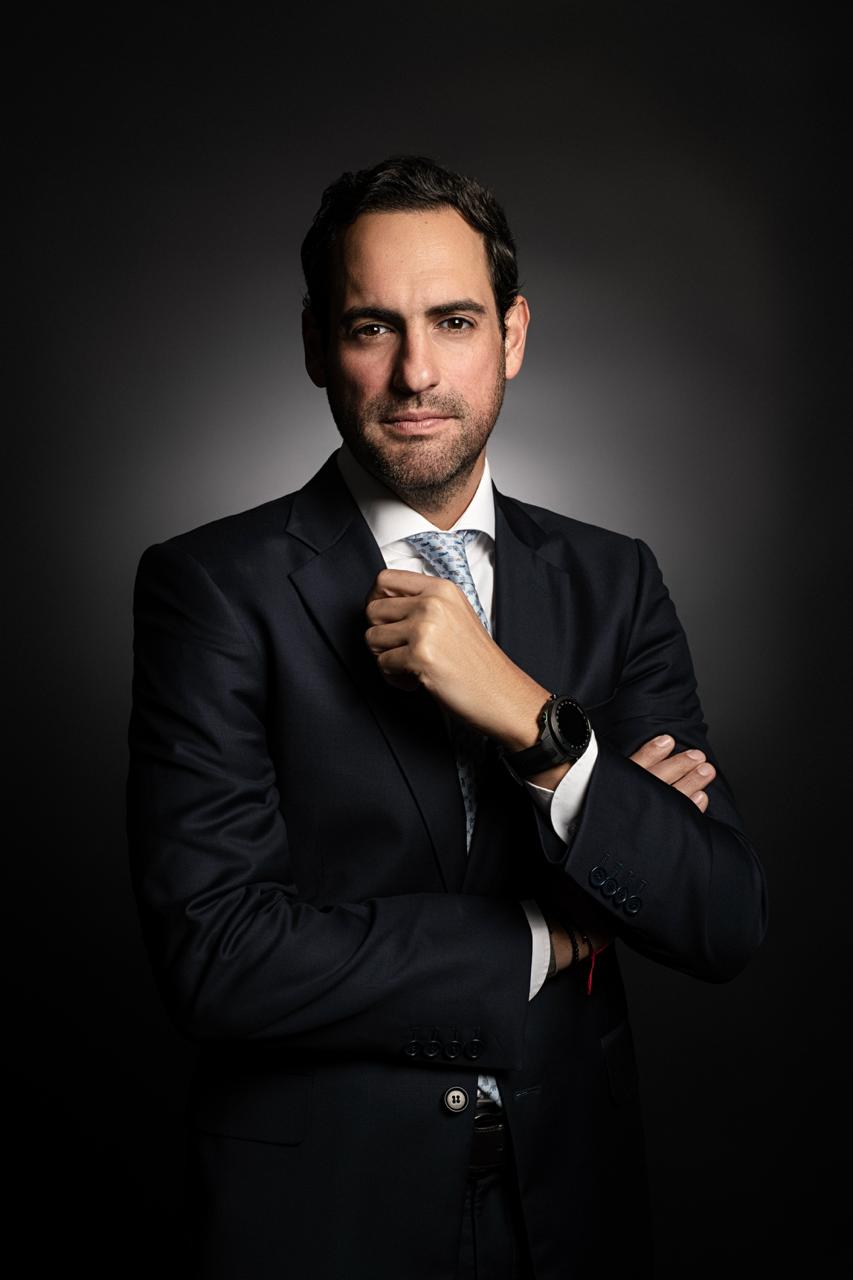
Rene Saul – CEO, Kapital
Latin America’s Fintech Unicorn: Rene Saul, CEO of Kapital
Listen on:





Rene Saul knows what it feels like to be the customer he is now serving. Before founding Kapital, he was an SMB himself, doing agricultural loans for producers exporting to the United States and factoring with large American enterprises, experiencing firsthand the friction, the opacity, and the lack of access to liquidity that defines business banking in Latin America. That experience became the thesis for Kapital, a company that started with a simple idea: what if you could onboard a business with nothing more than a tax ID, understand everything about it from electronic invoicing data, and give it access to liquidity and financial visibility in a single platform? Today Kapital is Latin America’s first AI native fintech unicorn, serving more than 350,000 customers across Mexico, Colombia, the United States, and beyond. It has a 700 million dollar revenue run rate, generated more than 55 million dollars in net profit in the first half of 2026, grown its loan portfolio and payments by 300 percent, and reached more than 4 billion dollars in deposits. A 125 million dollar Series C extension announced during this episode doubled the company’s valuation to over 1 billion dollars. An IPO is on the horizon.
On this episode of The Reboot Chronicles Podcast, we sit down with Rene Saul, CEO of Kapital, to unpack how Latin America’s largest B2B fintech was built on a thesis most investors initially rejected, why being a regulated entity from day one turned out to be the right call, how Kapital’s AI native platform knows its customers better than they know themselves, what cross border payments between Mexico and the United States actually look like when done right, and why the enemy of rebooting yourself is always the ego.
The Thesis Nobody Believed: Regulated From Day One
When Rene Saul and his co-founder Fernando began building Kapital, they made a decision that immediately cost them investment opportunities: they insisted on becoming a regulated banking entity from the start. The prevailing fintech narrative at the time was that regulation was the enemy of disruption, that fintechs should move fast outside the regulatory framework and figure out compliance later. Some venture funds told them directly that their decision to pursue a banking license was contrary to the fintech wave they were supposed to be riding.
Saul’s counterargument was grounded in the reality of the market he was serving. A small or medium sized business in Latin America is not going to deposit its money with an unregulated entity. Trust is not a marketing problem in that context. It is a structural requirement. His thesis was also a prediction: fintechs that reach meaningful scale will eventually become banks. Nubank became a bank. Revolut became a bank in every market it operates in. Kapital was simply doing it first, absorbing the short-term cost of regulation to build the foundation for long-term scale. The acquisition of Banco Adafin in Mexico and assets from Intercam validated the approach. The investors who passed on Kapital because it was regulated are now watching a unicorn they did not invest in.
The AI Native Advantage: Knowing Customers Better Than They Know Themselves
Kapital’s AI native platform is not a feature layered on top of a traditional banking system. It is built on a data foundation that most financial institutions cannot access. In Latin America, all businesses operate through electronic invoicing, and every invoice carries a digital stamp that creates a traceable, verifiable record of commercial activity. Kapital has been ingesting and analyzing that data since its founding, building a picture of each customer’s financial behavior, supply chain position, and liquidity needs that the customer itself often does not have.
The practical result is an onboarding experience that requires only a tax ID and a platform that immediately surfaces financial analytics directly in the customer’s banking interface. The insight behind this design is that the only place SMB owners reliably look is where their money is. If the analytics are in the bank account, they will use them. If they are in a separate ERP or reporting tool, they will not. By embedding financial intelligence into the banking layer, Kapital gives its customers the visibility to make better decisions and the access to liquidity to act on them, improving their performance as supply chain participants and strengthening their relationships with the enterprise customers they serve. That flywheel, better visibility leading to better performance leading to better supply chain outcomes for enterprise customers, is the core of Kapital’s business model.
Cross Border Payments and the 24/7 Advantage
The cross border payment market between Mexico and the United States is larger than the remittance market, representing approximately 800 billion dollars in annual flows. Kapital has captured roughly 10 percent of that market, and the differentiation is straightforward: speed and availability. Kapital moves money across borders in under a minute, 24 hours a day, 7 days a week. Traditional banking infrastructure moves that same money in one to three business days, and only during banking hours on weekdays. For a business managing supply chain payments across borders, that difference is not a minor convenience. It is an operational advantage that compounds every time a payment needs to be made.
Kapital’s infrastructure in the United States, including banking partnerships and a banking license in Puerto Rico, allows it to serve businesses operating on both sides of the border with a unified platform. Rather than forcing those businesses to maintain separate banking relationships in each country and manage the friction of moving money between them, Kapital handles both sides of the equation in a single ecosystem. For the SMBs and enterprises that have experienced what cross border payments actually cost in time, fees, and operational complexity through traditional channels, the contrast is significant enough that switching requires very little persuasion.
From 230 Pounds to Paris Marathon to Fintech Unicorn: The Resilience Philosophy
Rene Saul’s story did not start with a clean slate and a well-funded founding team. It started with a New Year’s Eve bet. In December 2011, weighing 230 pounds and having never run before, Saul told his family and friends that he was going to run the Paris Marathon. His father gave him the look that said he did not believe it. A friend’s father bet that Saul could do it. By April, Saul had lost 40 pounds. He ran the Paris Marathon and beat his friends who ran alongside him.
He tells that story not as an athletic achievement but as a statement of operating philosophy. He did not run the marathon to prove his father wrong. He ran it to honor the person who bet on him. That same logic, performing for the people who believe in you rather than to spite the people who doubted you, is the principle he applies to fundraising and to building Kapital. More than 100 venture funds rejected Kapital before the right investors said yes. Y Combinator almost missed the company entirely because a partner’s response to their application ended up in a spam folder. The acceptance email was found two weeks late. Kapital got in anyway.
The fundraising journey that followed required the same resilience as mile 22 of a marathon, the point where every runner hits the wall and has to decide whether to keep going. Saul’s framework for getting through it is consistent: every rejection is information, every no tells you something about what to improve, and the only response to rejection is to keep executing and keep listening. “When I see that the door is a little bit open,” he said, “I just go in.”
Autopoietic Governance and the Self-Regulating Company
Scaling Kapital from a founding team to a 3,500-person regulated financial institution required a fundamental shift in how Saul operates as a leader. The skills that make a founder effective at the earliest stage, solving everything personally, being in every decision, driving everything through force of will, become liabilities at scale. The transition Saul has navigated is from being the person who solves problems to being the person who builds systems that solve problems.
A director who recently joined Kapital described what he observed in a note to Saul using the term autopoietic governance, a concept from systems theory describing structures that sustain and correct themselves without constant external intervention. Processes that work by design rather than by pressure. Decisions that align on their own because the framework is clear. An organization that does not need constant supervision to operate with order. Saul describes his current role as setting the strategy and the culture, then getting out of the way so the leaders around him can execute. His job is to help them, not to tell them what to do. The CEOs who confuse those two things, he argues, are the ones who become the bottleneck in their own companies.
The personal discipline behind that approach is grounded in something Saul talks about with unusual directness: the ego is the enemy of rebooting. The more success accumulates, the more dangerous complacency becomes. His antidote is surrounding himself with people who will tell him when he is wrong. At home, that person is his wife. In business, he actively seeks leaders who will challenge his thinking rather than confirm it. At the top of any organization, he notes, everyone tends to say yes. Finding the people who will say no is one of the most important things a CEO can do. “Gratitude changes everything,” he said. “The bigger you scale, the more humble you have to be.”