
August, 5 2026
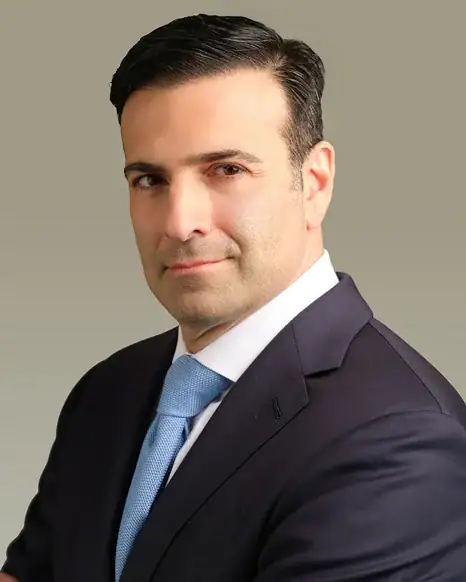
Raja Tabet – SVP, Synopsys
Rebooting Silicon: Raja Tabet, SVP at Synopsys
Listen on:





Every drone, autonomous vehicle, AI agent, and smart device running in the world today depends on silicon. And the software that enables that silicon to be designed, verified, and manufactured at scale is the domain of Synopsys. With nearly 28,000 employees and a clear path toward becoming a 10 billion dollar company, Synopsys has spent nearly four decades building the electronic design automation tools that chip companies cannot operate without. Now, with the acquisition of Ansys completed one year ago, Synopsys has expanded its platform from chip design into full system simulation, covering thermal, mechanical, fluid, and electrical considerations simultaneously. The result is a company that sits at the intersection of every major technology wave reshaping the global economy, from AI and data centers to autonomous vehicles, robotics, and quantum computing. Raja Tabet, senior vice president of strategic missions and technology at Synopsys, leads the forward-leaning portfolios at that intersection and has spent decades navigating the edge of what is possible in semiconductor design and systems engineering.
On this episode of The Reboot Chronicles Podcast, we sit down with Raja Tabet, SVP at Synopsys, to unpack why silicon is the most fundamental enabler of the pervasive intelligence era, how the Ansys acquisition transformed Synopsys into a full stack partner for system builders across every major industry, what digital twin technology means for the future of data centers and product development, how Synopsys is navigating deep partnerships with Microsoft and Nvidia while remaining neutral across the broader ecosystem, and what the next generation of engineers needs to understand to stay relevant in a world where AI is handling more and more of the coding.
Why Silicon Is the Foundation of the Pervasive Intelligence Era
The intelligence now embedded in watches, phones, cars, industrial systems, and increasingly in robots and drones does not exist without chips. And those chips do not exist without the software infrastructure to design, verify, and manufacture them at the complexity levels modern applications require. Synopsys has been building that infrastructure for nearly four decades, and the demand for it has never been more acute. Chip design complexity is growing exponentially, not linearly. Time to market has compressed dramatically, with data centers refreshing hardware on cycles that used to span five to seven years now being pushed toward two to three. And engineering talent has not scaled proportionally to meet that demand.
Those three pressures, rising complexity, accelerating timelines, and constrained talent pipelines, define the core problem Synopsys exists to solve. Its electronic design automation tools allow chip design teams to manage complexity that would be impossible to handle manually, compress the time from design to verified, manufacturable chip, and multiply the effective output of engineering teams without requiring them to grow headcount at the same rate as the technology demands. As Tabet describes it, the charter is to deliver nonlinear improvement in tools so customers can continue to drive their product roadmaps forward regardless of what the engineering talent market looks like.
The Ansys Acquisition: From Chip Design to Full System Simulation
For most of its history, Synopsys focused on the electronics layer of product development. That meant chip design, verification, and manufacturing sign-off. But as the company’s customers evolved, many of them began building not just chips but complete systems, and those systems required simultaneous consideration of domains that EDA tools were not designed to address: thermal behavior, mechanical stress, fluid dynamics, and electrical load across the full system architecture.
The acquisition of Ansys, completed one year ago, was the strategic response to that shift. Ansys is the world’s leading multiphysics simulation and analysis company, and combining it with the world’s leading EDA company created a platform that no competitor can currently replicate. Where customers previously designed different physical domains in isolation and added margin to accommodate integration issues, they can now model all of those domains simultaneously and concurrently. The cost savings are significant. Margin is expensive. But the time savings are equally compelling. Tabet describes the combined platform as giving Synopsys the ability to be a broad based partner to system customers across automotive, data centers, robotics, and aerospace, covering everything from the silicon layer up to the complete system. The timing aligned with a market dynamic Synopsys had been watching closely: chip companies moving up into systems, and OEM system companies moving down into chips, creating a converging customer base that needed exactly the full stack capability the combined company now offers.
Digital Twins and the Future of System Development
One of the most significant capabilities the Ansys combination unlocks is digital twin technology at the system level. Traditionally, product development required physical prototypes: build it, test it, find the problems, send it back, fix it, repeat. For complex systems like data center hardware, autonomous vehicles, or advanced medical devices, that cycle is prohibitive in both cost and time. A leading edge chip alone can represent hundreds of millions of dollars in development cost, and the system it sits within is often orders of magnitude more complex.
Digital twins address that problem by creating virtual replicas of physical systems with enough fidelity to validate software, test integration across electronic, thermal, mechanical, and fluid domains, and identify design issues before a single physical prototype is built. With the combined Synopsys and Ansys portfolio now spanning silicon to systems, Tabet describes the ability to build digital replicas of complete systems and run validation workloads against them virtually, cutting down on prototyping cycles that once consumed years of development time. The application is not limited to one industry. Automotive companies, data center operators, robotics developers, and drone manufacturers are all facing the same pressure to get complex systems right faster and at lower cost, and digital twins are becoming the standard approach to managing that pressure.
Navigating the Ecosystem: Neutral by Design
Synopsys operates in an environment dominated by the world’s largest technology companies, all of which are potential partners, potential competitors, or both simultaneously. Microsoft and Nvidia are two of its most prominent public partnerships, both deep enough that Tabet can discuss them specifically. The Microsoft relationship began roughly three years ago and has evolved from early exploration of GPT-based capabilities into active collaboration on agentic technology, working toward AI systems that can independently execute the design and engineering workflows that currently require CAD engineers to complete manually. The Nvidia partnership reflects the central role that GPU-based computing now plays across the semiconductor design and simulation workloads that Synopsys supports.
What makes those partnerships viable without alienating the rest of the ecosystem is a deliberate architectural decision Synopsys made early in the AI era. Rather than building its core capabilities in ways that tied them to any single cloud provider or platform, the company packaged its differentiation, the proprietary EDA algorithms and simulation solvers developed and refined over decades, in a form that can be deployed on Microsoft Azure, on AWS, on premise, or within customer proprietary environments. The customers dictate the deployment model. Synopsys delivers the same underlying capability regardless of which infrastructure the customer has standardized on. That neutrality is not a positioning statement. It is an architectural commitment that requires significant engineering investment to execute, and it is the reason Synopsys can maintain deep partnerships across an ecosystem where many of its largest partners are also in competition with each other.
The Data Center of the Future and the Quantum Horizon
Synopsys’s expanded platform puts it at the center of one of the most capital-intensive buildouts in the history of technology: the next generation of AI data centers. The core constraint driving that buildout is not raw compute capacity. It is intelligence per watt per unit of space. Every major hyperscaler is racing to maximize how much useful AI output they can extract from a given power budget and physical footprint. That pressure is shortening hardware refresh cycles, driving interest in modular architectures that can be updated incrementally rather than requiring full facility redesigns, and creating enormous demand for simulation tools that can validate system performance before expensive hardware is committed to production.
Quantum computing represents the next horizon on Synopsys’s roadmap, and the company is approaching it on two tracks. The first is active engagement with quantum hardware developers today, supporting them with design automation and simulation tools adapted for quantum system development. The second is internal preparation for what quantum computing will eventually mean for Synopsys’ own algorithmic capabilities, specifically identifying which of its existing tools and algorithms would benefit from quantum acceleration and beginning to model what that looks like. Tabet is measured on timelines, noting that the five year horizon that has long been attached to quantum viability may be approaching reality, but does not treat it as a near term business driver. The work happening now is foundational preparation rather than production deployment.
Engineering in the AI Era: Judgment Over Syntax
The question of what happens to engineering jobs as AI takes over more of the coding work is one Synopsys faces internally with 28,000 employees, a significant portion of whom are software and hardware engineers. Tabet’s answer is grounded in how Synopsys is deploying these tools within its own teams and with its customers. The premise that agentic AI will eliminate engineering roles is, in his view, overstated. What it will change is the nature of the work.
Engineers trained to solve problems will continue to solve problems. What they will spend less time on is the mechanical work of writing code syntax, debugging individual lines, and iterating through verification cycles manually. What they will spend more time on is design and architecture decisions, evaluating AI-generated outputs, and exercising the engineering judgment to determine whether what the system produced is actually correct and good enough to move forward. That judgment cannot be automated. It requires understanding what good code and good design look like, which means engineers still need the foundational knowledge even if they are no longer producing every line themselves. The practical effect, Tabet argues, is that an engineer who once ran one design iteration in a day can now evaluate twelve simultaneously, choosing the best one and moving forward faster. The productivity gain is real. The need for engineering judgment to direct and validate it is equally real.
His advice for the next generation of engineers is the same principle that has guided his own career across IBM, Freescale, NXP, and now Synopsys: persistence and curiosity. The engineers who will thrive in the AI era are not the ones who can write the most code. They are the ones who remain genuinely curious about how systems work, persistent enough to develop deep expertise, and adaptable enough to move up the value chain as the tools handling the lower level work continue to improve.
#growth #innovation #therebootchronicles #deandebiase #BuildBuyBorrow #RajaTabet #Synopsys #Ansys #Semiconductor #ChipDesign #EDA #DigitalTwin #AIInfrastructure #SiliconInnovation #QuantumComputing #DataCenter #AutonomousVehicles #Robotics #AgenticAI #EngineeringLeadership #CHIPSAct #Nvidia #Microsoft #PervasiveIntelligence #FutureOfWork #TechLeadership #BusinessReboot #Leadership #CEOInsights #Innovation