June 17, 2026
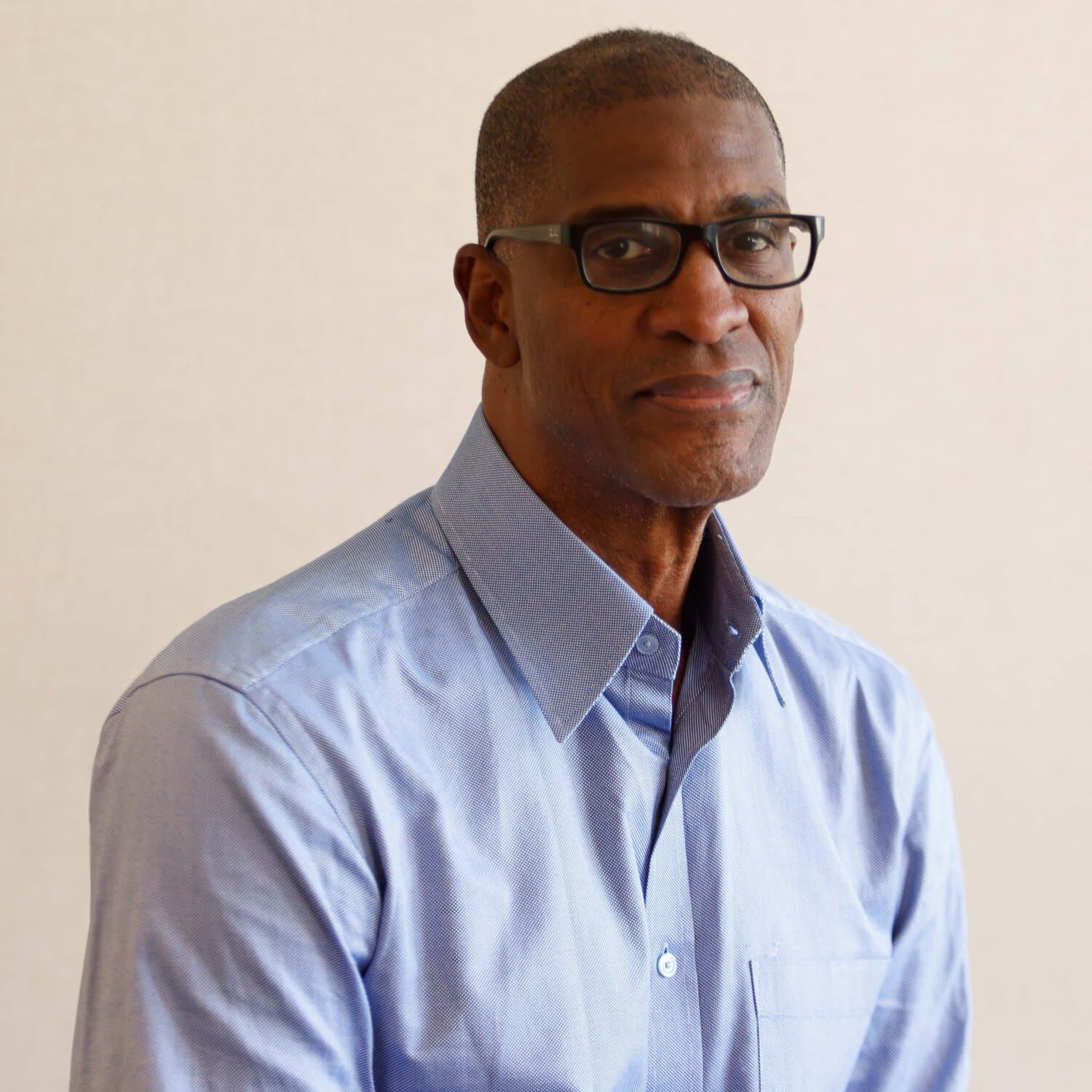
Charles D. Smith – CEO, Urban Icon Global
NBA Player turned Global Entrepreneur: Charles D. Smith, Chairman & CEO of Urban Icon Global
Listen on:





Charles D. Smith started his career as one of the NBA’s premier shot blockers and Olympian. What followed was a transformation that defined his second act; far more difficult than anything he faced on the court. After retiring from professional basketball, Smith spent seven years in therapy rebuilding how he thought, communicated, and led; a process he describes not as a transition but a full transformation. Today, Smith is chairman and CEO of Urban Icon Global, a company that works directly with governments and civic leaders across Africa to design sports & entertainment facilities, and that drive economic development. His investment conferences and cross-cultural initiatives have generated over a billion dollars in collaborations across five continents, connecting CEOs, dignitaries, private equity firms, and family offices from New York to Dubai. With operations now active in Zanzibar and expanding into Nairobi, Ethiopia, and Uganda, Smith is positioning Urban Icon Global to unlock a piece of the 40 billion dollar African sports and entertainment market, built on a humanitarian foundation rather than a real estate model.
On this episode of The Reboot Chronicles Podcast, we sit down with Charles D. Smith, chairman and CEO of Urban Icon Global, to unpack how he redefined himself after professional sports, why he chose Zanzibar as the starting point for an East African expansion, how faith and relationships became the foundation of his business strategy, and what it takes to build a scalable platform in a market most investors still misunderstand. Smith also shares the personal story behind his approach to leadership, accountability, and legacy.
From Athlete to Entrepreneur: A Transformation, Not a Transition
Smith had an entrepreneurial mindset from childhood, but retiring from professional basketball forced him to confront a harder challenge than starting a business. The communication style and competitive instincts that served him on the court did not translate to the corporate world. He describes himself, candidly, as having been an HR nightmare in his early professional roles. Direct, impatient, and unwilling to back down, traits that are assets in professional sports, became liabilities in an office environment.
The seven years of therapy that followed were not incremental. Smith says he barely recognizes the person he was before that process began. He had to consciously check the ego that sports had reinforced for decades and rewire how he approached conflict, competition, and collaboration. The aggression that made him one of the league’s top shot blockers had no place in a boardroom. What emerged from that process was a leader who retained the discipline and work ethic of an athlete while operating with an entirely different relational approach to the people around him.
A Leap of Faith into Zanzibar
After years in corporate roles, including a stint at WPP, Smith says he felt called by God to go to Africa, despite lacking construction experience, knowledge of the local business culture, or roadmap on how to begin. He describes it as purpose without preparation. He visited several countries and met with multiple heads of state before settling on Zanzibar, a decision driven less by market analysis and more by a direct conversation with the country’s president that convinced him it was the right starting point.
In retrospect, Zanzibar turned out to be an ideal proving ground. As one of the continent’s top tourist destinations, it offered a stable environment, a welcoming culture, with local partners willing to help Smith learn the business from the ground up. He contrasts this with the more complex political environments of larger countries like Nigeria, where he believes he would still be stuck at step one if he had started there. Zanzibar gave Urban Icon Global the space to build its model before scaling into more challenging markets.
A Humanitarian Business Model Built to Scale
Urban Icon Global’s projects center on multi use arenas seating between 10,000 and 15,000 people, paired with hotel partnerships, including a contract with Hilton, and high-performance centers focused on youth job creation in technology, hospitality, and entrepreneurship. Smith is clear that the company’s real product is not the buildings themselves but the people and communities the buildings are designed to serve. Every project requires hiring at least 40 percent of its workforce from the local community, before, during, and after construction, with training provided for workers who need it.
The company’s expansion strategy reflects lessons learned during nearly six years of operating in Zanzibar as what Smith calls the beachhead company, absorbing the early risk while the broader investment market caught up to the opportunity. Rather than focusing on completing a single flagship project, Urban Icon Global used that period to build a replicable platform. The company partnered with Taylor Townsend, one of the largest construction management firms on the continent with three decades of experience, allowing Urban Icon Global to focus on predevelopment work, land leases, and investor relationships. That structure, combined with careful attention to tax frameworks across different countries, allowed the company to match its platform to an investor’s thesis rather than pitching a single project from scratch each time.
Relationships as Currency and the Role of Faith in Business
Smith describes relationships as the most valuable currency; more valuable than capital, status, or any visible marker of success. He points to a specific example: meeting a lawyer in an airport years before he had any business in Kenya, telling her he would call when he eventually got there. A promise he delivered on years later. She is Urban Icon Global’s lawyer in Kenya today. For Smith, these are not coincidences but the result of staying open to relationships and following through on them consistently over time.
That same framework extends to how Smith talks about faith in business. He distinguishes between having faith as a personal belief and what he calls partnering with faith as an operating principle, particularly in moments when he has negotiated directly with presidents, prime ministers, and dignitaries without any business partner physically present. Whether framed in explicitly religious terms or simply as a set of principles for navigating uncertainty without a roadmap, the underlying approach is the same: stay grounded, stay grateful, and trust that the next step will reveal itself when needed. When fear or skepticism creeps in, Smith says the antidote is gratitude, looking back at how far the company has come compared to where it stood a year or two earlier.
Building Toward Legacy: People Over Buildings
As Urban Icon Global looks toward expansion into Nairobi, Ethiopia, and Uganda, Smith is direct about what success ultimately means. The buildings, arenas, and hotels are the company’s commercial legacy, but the real legacy he is focused on is the youth and young adults across East Africa whose lives are shaped by the job creation, training, and opportunity these projects create. He notes that East Africa, is often overlooked in favor of West and South Africa in broader conversations about growth; yet represents an emerging economic force in its own right.
Smith says the company is actively building relationships with technology partners, including software companies looking to enter the sports and entertainment industry. In addition, infrastructure providers in areas like data centers and networking equipment for countries that currently lack reliable connectivity. His only requirement for new partners is that the relationship be mutually beneficial and value driven. A company built as a platform model from day one, the goal has always been plug and play scalability; allowing partners to enter the ecosystem with an Urban Icon Global on ramp.