April 14, 2026
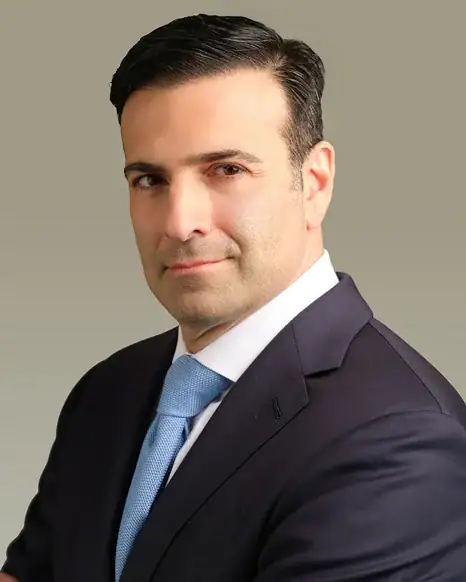
Heath Tarbert -President – Circle
How To Reboot Old School Banking – Heath Tarbert, FMR Asst. Treasury Secretary & Circle President
Listen on:





The global financial system is being rebuilt from the ground up, and Heath Tarbert is helping lead that effort As President of Circle, the company behind USDC, the world’s second largest regulated stablecoin, Tarbert brings a rare combination of regulatory authority, legal prowess, and market experience to one of the most consequential shifts in modern finance. Having served as Chairman of the CFTC, Assistant Secretary of the US Treasury, and Chief Legal Officer at Citadel Securities, he has operated at the center of global finance for decades, representing the United States at the G7, G20, the World Bank, and the Financial Stability Board. Today, he is applying that experience to Circle’s mission of building the infrastructure for a global internet financial system, one where dollars move as easily and instantly as an email.
On this episode of The Reboot Chronicles Podcast, we sit down with Heath to unpack the rise of stablecoins, the passage of the Genius Act, and what it means for banks, businesses, and consumers around the world. Heath breaks down how Circle has evolved from a stablecoin issuer into a full-stack internet financial platform, why the developing world is leading adoption, how ARC, Circle’s new purpose-built blockchain, could become the economic operating system of the next generation of finance, and what the innovator’s dilemma means for the banks that are slow to respond.
From the CFTC to Citadel to Circle: A Career at the Intersection of Law, Policy, and Finance
Heath Tarbert’s path to Circle was shaped by a career spent at the intersection of law, policy, finance, and technology. After leaving the CFTC in 2021, he joined Citadel Securities as Chief Legal Officer, where roughly 25 percent of the US stock market volume flows through its systems on any given day. The role gave him a front-row seat to how algorithmic trading and advanced market structures were reshaping the equities markets. When Citadel Securities relocated from Chicago to Miami, Tarbert chose to stay close to his family rather than move, and began looking for his next opportunity.
That opportunity came at an unlikely moment. It was the middle of the crypto winter, and Circle was not an obvious destination for someone with his background. But Tarbert had been tracking the crypto industry for years. While serving at the US Treasury and representing the United States at the Financial Stability Board, he had watched the early debate around Facebook’s Libra project unfold among central banks, finance ministries, and securities regulators around the world. That experience convinced him that fiat currency on blockchain was not a question of if, but when and who would do it right. When he learned about Circle and its Co-Founder Jeremy Allaire, he saw a company that had been building toward exactly that vision for more than a decade. He joined as President, and has been leading the company through one of the most significant periods in its history, including its recent IPO, which raised approximately one billion dollars and valued the company at around $8billion dollars, with roughly $78 billion dollars of USDC in circulation and an all-time transaction volume of approximately $70 trillion dollars across 32 blockchains.
What Is a Stablecoin (USDC) and Why It Matters
The concept behind a stablecoin is straightforward even if the technology beneath it is not. As Heath explains, Circle Co-Founder Jeremy Allaire started with a simple question more than a decade ago: what if you could send a dollar as safely, securely, and instantaneously as you could send an email? That is what USDC is. It is a digital dollar, fully backed one for one by high quality liquid assets including treasury bills, that lives natively on the internet and can be sent anywhere in the world over blockchain infrastructure.
To understand why that matters, it helps to understand how the internet has evolved. The first generation of the internet allowed people to read and access information. The second generation, Web2, allowed people to share content and interact. The third generation, Web3, combines internet protocol technology with cryptography over blockchains to allow people to send not just data but value. Web3 is effectively the internet of value, and stablecoins are the dollar’s place within it.
What separates USDC from other so-called stablecoins is the regulatory and structural framework Circle has built around it. Every dollar held in reserve is backed one for one, with full transparency published on Circle’s website and independently attested by accounting firms. USDC is subject to supervision, first through New York’s BitLicense framework and now transitioning to oversight by the Office of the Comptroller of the Currency under the recently passed Genius Act. Circle is also subject to anti-money laundering and counterterrorism financing requirements under the Patriot Act, the same standards applied to traditional financial institutions. Those features, Tarbert argues, are what make USDC genuinely usable at scale by institutions, businesses, and ultimately consumers.
Building the Internet Financial System: Circle’s Three-Pillar Platform Strategy
Circle has evolved significantly beyond its origins as a stablecoin issuer. The company now describes itself as a full-stack internet financial platform, organized around three core pillars. The first is base infrastructure, the foundational layer that makes everything else possible. A key example is the Cross Chain Transfer Protocol, or CCTP, which allows USDC to move natively and near-instantaneously across multiple blockchains rather than requiring users to convert assets off one chain and onto another. That interoperability, currently spanning more than 30 blockchains, is a meaningful competitive advantage and a core part of Circle’s network effects strategy.
The second and third pillars build on that foundation with digital asset products and developer and platform services that allow businesses and institutions to integrate USDC and Circle’s infrastructure into their own products and workflows. Circle’s partner platform already serves thousands of institutions across a wide range of use cases, from cross-border treasury management for multinational corporations to remittance services in markets where traditional banking infrastructure is limited or unreliable.
The most significant infrastructure investment Circle has announced is ARC, a new layer-one blockchain purpose-built for enterprise financial use cases. Unlike existing blockchains that were not designed with the specific requirements of global finance in mind, ARC was built in close collaboration with large financial institutions, exchanges, regulators, and central banks. It features sub-second deterministic finality, meaning transactions are confirmed instantly and with certainty rather than probabilistically, and it is built with the same cross-chain interoperability as USDC itself. Any tokenized asset issued on ARC through Circle will be able to move across the broader blockchain ecosystem, a capability Tarbert describes as the foundation for what Circle believes will become the economic operating system of the new internet financial system.
The Innovator’s Dilemma for Banks and the Global Opportunity Ahead
The adoption curve for stablecoins and on-chain finance is following an unusual pattern. Rather than starting with domestic consumer use and expanding outward, the most acute demand is coming from institutional users and from markets outside the United States where cross-border frictions and currency instability create an immediate and practical need for a reliable digital dollar. Multinational corporations moving money through global treasury systems, remittance providers serving populations that currently pay some of the highest fees in the financial system to transfer money, and consumers in countries with volatile or devalued local currencies are all early and active users of USDC today.
The developing world in particular represents a significant growth opportunity. In many markets across Africa, Latin America, and Southeast Asia, large institutions and sovereign funds can access US dollars but ordinary consumers cannot. With a smartphone and a digital wallet, those consumers can now hold USDC and gain access to dollar-denominated stability for the first time. Tarbert draws a direct parallel to mobile phone adoption in Africa, where the absence of landline infrastructure meant that mobile technology delivered far more per-capita value than it did in markets where legacy systems already existed. The same dynamic, he argues, is playing out now with digital dollars.
For US banks, the challenge is a classic innovator’s dilemma. Traditional bank deposits can be lent out at favorable rates, while stablecoin reserve requirements are highly conservative. That creates a structural disincentive for banks to aggressively promote stablecoin adoption among their own customers. At the same time, fintechs, crypto exchanges, and payments platforms including Visa, Mastercard, Coinbase, Robinhood, and Stripe are already integrating USDC into their products and reaching the next generation of customers that may never set foot in a physical bank branch. Circle’s position in this landscape is intentionally infrastructure-neutral. The company is not building a consumer deposit business and has no intention of competing directly with banks. Instead, it is building the rails that banks, payments companies, and other institutions can use to participate in the on-chain financial system, and it is doing so at a scale and with a regulatory track record that is increasingly difficult for any single institution to replicate