
October, 14 2026
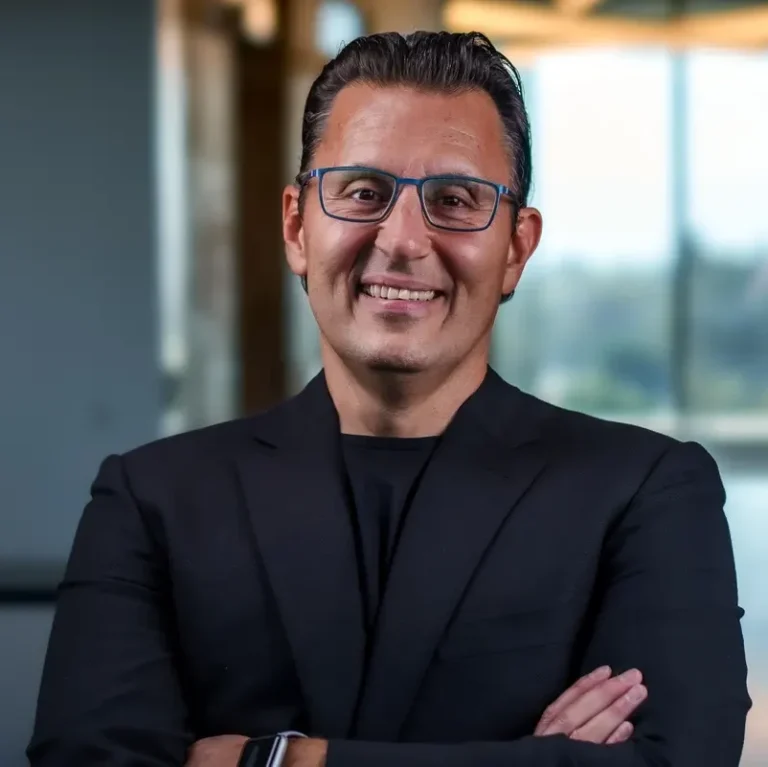
Nitesh Bansal – CEO, R Systems
From Experimentation to Impact: Nitesh Bansal, CEO of R Systems
Listen on:





Enterprise AI has reached an uncomfortable middle stage. According to R Systems’ own research and client conversations, roughly 65 percent of companies are experimenting with AI in some form, but only about 18 percent have actually put it into production with use cases tied to clear ROI. The tools are no longer the bottleneck. Every company can access the same models, the same platforms, and the same subscriptions. What separates the leaders from the laggards is execution: choosing the right problems, moving with speed, and having people who know how to turn powerful technology into measurable business outcomes. For CEOs who have moved from doubt and denial to “I must have a piece of it,” the question is no longer whether to adopt AI, but how to get it out of the lab and into the business.
On this episode of The Reboot Chronicles Podcast, we sit down with Nitesh Bansal, CEO of R Systems, the 30 year old, Blackstone backed, publicly listed digital engineering company helping Fortune 500s and governments shift from AI experiments to outcomes. Nitesh breaks down why most AI strategies stall, how the “AI velocity trap” undermines good ideas, how R Systems built an AI native stack of more than 150 reusable agents to compress delivery from months to days, and what it takes to make AI enterprise ready. He also opens up about his own reboot, from running a billion dollar P&L inside a much larger organization to leading a founder built company through a new era of growth.
The 18 Percent Problem: Why Most AI Strategies Are Failing
Bansal describes the current market as the latter part of the experimentation phase. Boards and CEOs have accepted that AI is coming, and many have swung from skepticism to wanting AI in every department at once. The result is a wave of pilots and proofs of concept, but far fewer deployments that change how the business actually runs. In his view, the companies stuck in experimentation are often applying AI to the wrong problems or applying it too narrowly. Layering AI on top of an existing process without rethinking the process itself delivers little more than expensive automation. “Otherwise you’ll be putting an elephant to pull a baby cart,” Bansal explained. “You have to look at AI as an opportunity to fundamentally reimagine the value chain.”
The test he applies is simple: if AI does not change the experience of the customer or the employee carrying out the work, it is probably not worth the investment. One example he points to is customer onboarding in financial services, where a know your customer process that once required nine separate steps can be reduced to a single document upload. That is the kind of redesign that moves a company from the 65 percent experimenting to the 18 percent generating real returns. He also emphasizes that leadership conviction matters. The more a CEO wants the organization to change, the more visibly that CEO has to commit to the change, the investment, and the encouragement required to see it through.
The AI Velocity Trap and the Importance of Speed
One of the most common failure points Bansal sees is what Bansal has coined the AI velocity trap. Smart teams arrive with sophisticated technology capable of solving real problems, but the solution takes so long to implement and tune that by the time it is ready, the business need has shifted and the value is gone. In a market where models and capabilities change every few months, speed of delivery has become as important as quality of technology. “A lot of times the smart people in the room will come with some extremely good technology, which does have the ability to solve for things, but it takes so much time to implement, so much time to get right, that it loses its value because the velocity is lost,” Bansal said.
His answer is to treat AI adoption as a human problem rather than a tools problem. The leading model providers are doing exceptional work, but their products are available to everyone. “You can swipe your card and subscribe to Claude, Anthropic, whatever else you want to use, but not everybody can use them to produce the same results,” he noted. “And that is a human problem. The human needs to be trained.” The competitive advantage, in other words, comes from people who know which problems to solve, which tools to apply, and how to get from idea to production quickly.
Reusable Agents and the Four Day Prototype
That philosophy shaped R Systems’ own reboot. In late 2024, Bansal and his leadership team started from a stark premise: if AI would increasingly do the work of programmers and testers, R Systems needed to become the best in the market at harnessing AI rather than competing against it. The company rebuilt its delivery model around an AI native tech stack that now includes more than 150 reusable agents, more than 1,500 reusable prompts and evals, and multiple MCPs. Rather than shrinking, the workforce has continued to grow, now numbering roughly 5,300 people globally, with the company expanding through about half a dozen acquisitions since Blackstone’s investment.
Reusability is what drives engineering velocity. Bansal described an accounts receivable posting agent that can be deployed with 60 to 80 percent reuse, then tailored with a few weeks of data tuning and forward deployed engineering work before going live. The results show up in client engagements. When a private equity backed benefits administration company shared a product requirements document outlining a process it wanted to improve, R Systems came back four days later. “We did not go back to them with a PowerPoint,” Bansal said. “We went back to them with a complete prototype of an agentic ecosystem built, which was handling that very process flow with almost 80 percent autonomy.” These capabilities are packaged in Exico, R Systems’ AI studio. The name reflects its two components: EX for the experience of people who have delivered more than 200 AI projects and know what not to do, and IQ for the intelligence built into the company’s reusable frameworks.
Making AI Enterprise Ready: Guardrails, Evals, and Humans in the Loop
Getting a prototype working is one challenge. Getting it ready for an enterprise environment is another. Bansal stresses that production AI requires guardrails, evaluation frameworks, governance, and clearly defined points where humans stay in the loop. That is why R Systems has invested as heavily in reusable evals as it has in agents themselves. Enterprises need confidence that AI outputs are accurate, auditable, and consistent before they put those systems in front of customers or into core operations.
R Systems remains services led, with product engineering as its core swim lane, and competes in a field that includes Accenture, Cognizant, Tata Consultancy Services, Persistent, and Capgemini. Bansal sees the company’s differentiation in its combination of engineering depth, speed, and reusable intellectual property. The Blackstone relationship adds another advantage. With a portfolio of more than 400 companies, Blackstone has opened doors to more than a dozen portfolio clients for R Systems, and the firm has also built specialized capabilities such as an IoT connector factory for AWS. For professionals navigating this shift, Bansal’s career advice is direct: master the fundamentals, get exceptionally good at articulating problems, and stay agile with technology as it continues to change.
The CEO Reboot: From Comfort of Certainty to Discomfort of Doubt
Bansal’s own reboot came when he moved from running a billion dollar P&L inside a much larger organization to leading R Systems, a company of roughly 200 million dollars in revenue with a 30 year, founder-led culture. He is candid that the transition brought real imposter syndrome. Some of the Blackstone portfolio CEOs he now sits alongside as peers were executives he once worked hard just to get a meeting with. During that period, a line from Adam Grant stayed with him: the move from the comfort of certainty to the discomfort of doubt. “As a leader of an organization, I had to get comfortable with the discomfort of doubt,” he said. “But you have to lead with conviction, because the cost to not make a decision is extremely high. So you have to decide and you have to live with that doubt.”
He also recalls advice that shaped how he approached a long established culture: decide whether you want to be a leader who demands respect or one who commands it. For Bansal, that meant earning credibility through results rather than title, and leading R Systems’ transformation from the front. With AI tailwinds, a growing acquisition strategy, and a delivery model built for speed, he is positioning R Systems to help enterprises move beyond experimentation and into measurable impact, and to build what Dean believes can become a billion dollar brand.